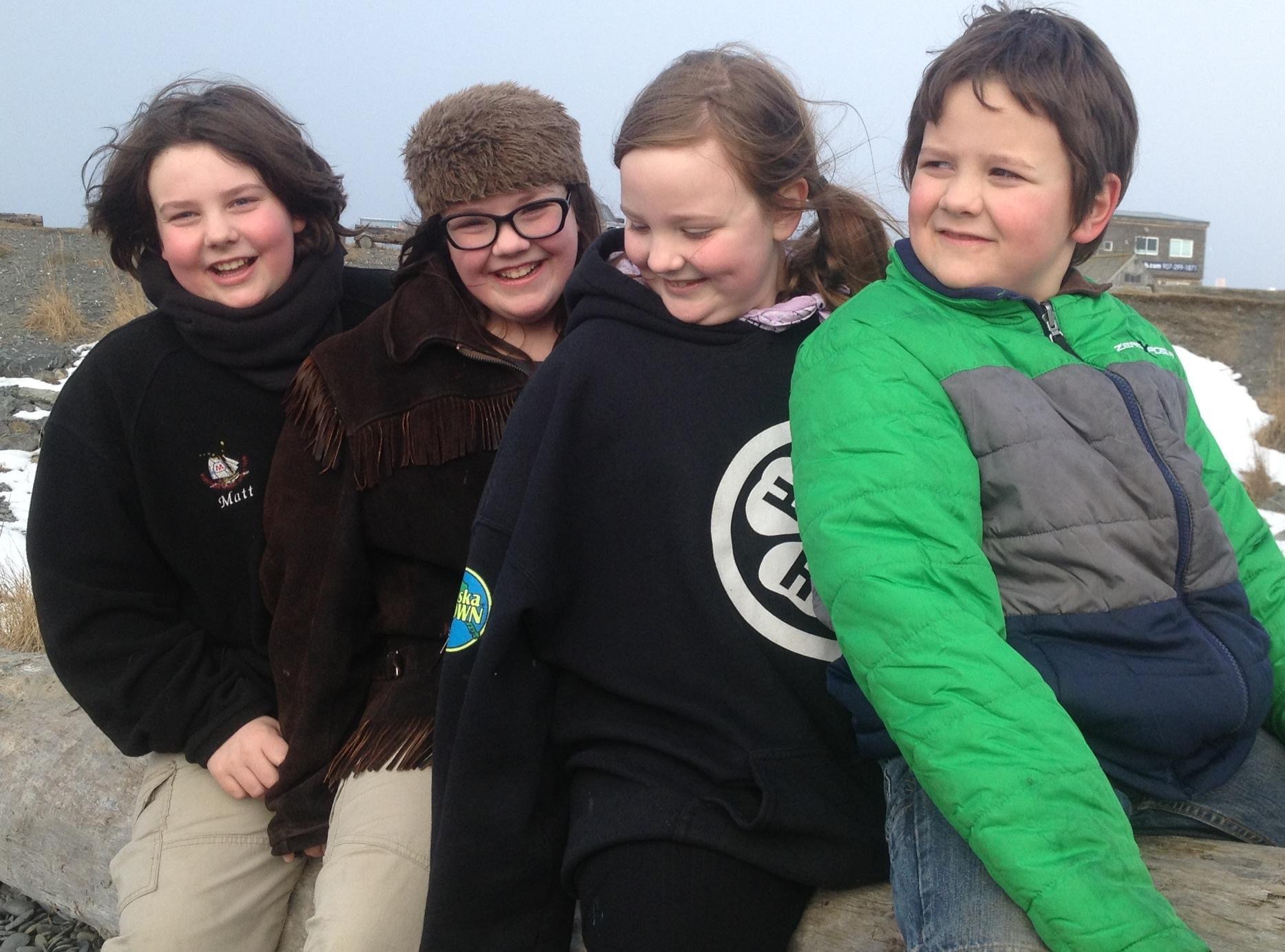
I started to type up how we began homeschooling, which started me on how we ended up with a family with a higher-than-average number of children, which took me down the path of finding my faith and trusting God with my marriage and children.
All of that took me far away from the list I started out to make when I began this piece—I am such a nerd for a good list—so I’ve reigned myself in to focus on just the list.
The storyteller in me wants to weave it all into one, and there may be some of that—okay, maybe a lot of that—but I’ll save the story behind the “Why” we started on the wild and crazy road of homeschooling for another evening of writing, maybe to remind myself when I am old and foggy in the memories. It is beautiful. And I suspect your reasons for homeschooling may be too, because after all, why else would we even consider homeschooling if it weren’t for children? Children are indeed beautiful, and a life’s work all on their own.
I have been a homeschooling mom for twenty years, beginning with my firstborn in preschool, scheduling my days with him rigidly and to the 15-minute mark, (with a two-year old and an infant in the house, mind you) expecting him to read at the age of four, if not five, and I enrolled him as a Kindergarten homeschooler just as soon as I could, at the age of five.
I ended my homeschooling mom era last Friday, wrapping up with my fourth-born, who somehow, I realized last fall, was a senior, and who I don’t think I ever really officially taught how to read. I am positive I never taught him the multiplication tables, this kid who spent the majority of his childhood barefoot (and until the age of six, bare-bottomed) out in the woods, playing with tools and building things with sticks and watching movies and reading books I never would have let the firstborn take in at his age. Ironically, he’s my most well-read, most history-based, scientifically inclined kid out of all four, even those I thought I was educating “by the book.”
See the swing there? That’s because:
1-Homeschooling teaches the teacher as much as it teaches the student. When I learned how to relax, (truthfully, it was out of necessity for me rather than any one epiphany) I learned the JOY in just letting my kids be kids and learn from things like building and working and spending time away from workbooks, learning fractions by baking cookies and using a tape measure, and learning from each other. I wish that when the baby exits the mom’s body this lesson would come along, right after the umbilical cord and placenta. This was the biggest lesson for me: I learn from teaching them just as much as they learn from me teaching them. And as I learn, I relax and am more confident, I let the sibling relationships develop, I let them explore with their minds the things that ignite their passions…all of which helps bring out their best.
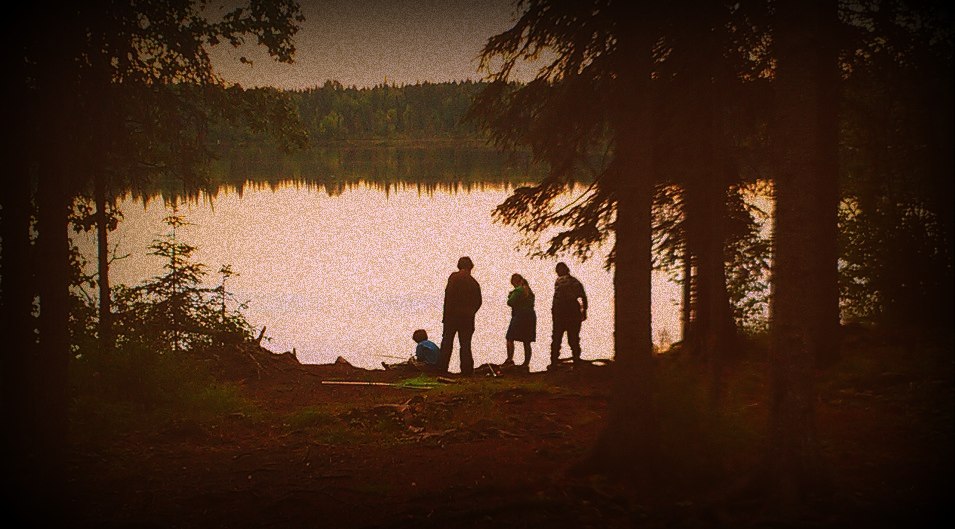
2-Everything is a lesson, even when it’s not in the lesson plan. A dear friend of mine, a mama just a few steps ahead on the homeschooling sidewalk asked me once when I was worried about making sure my students got their 180 days of education in each year:
“Do they quit learning on Saturdays?”
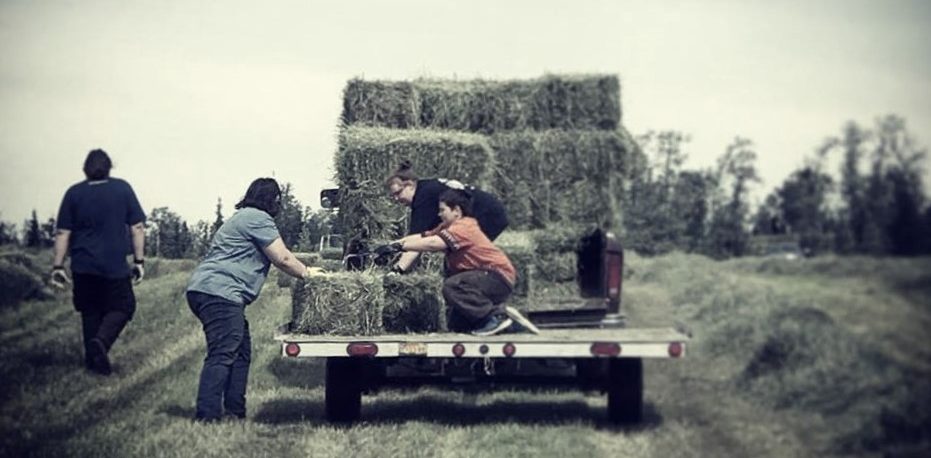
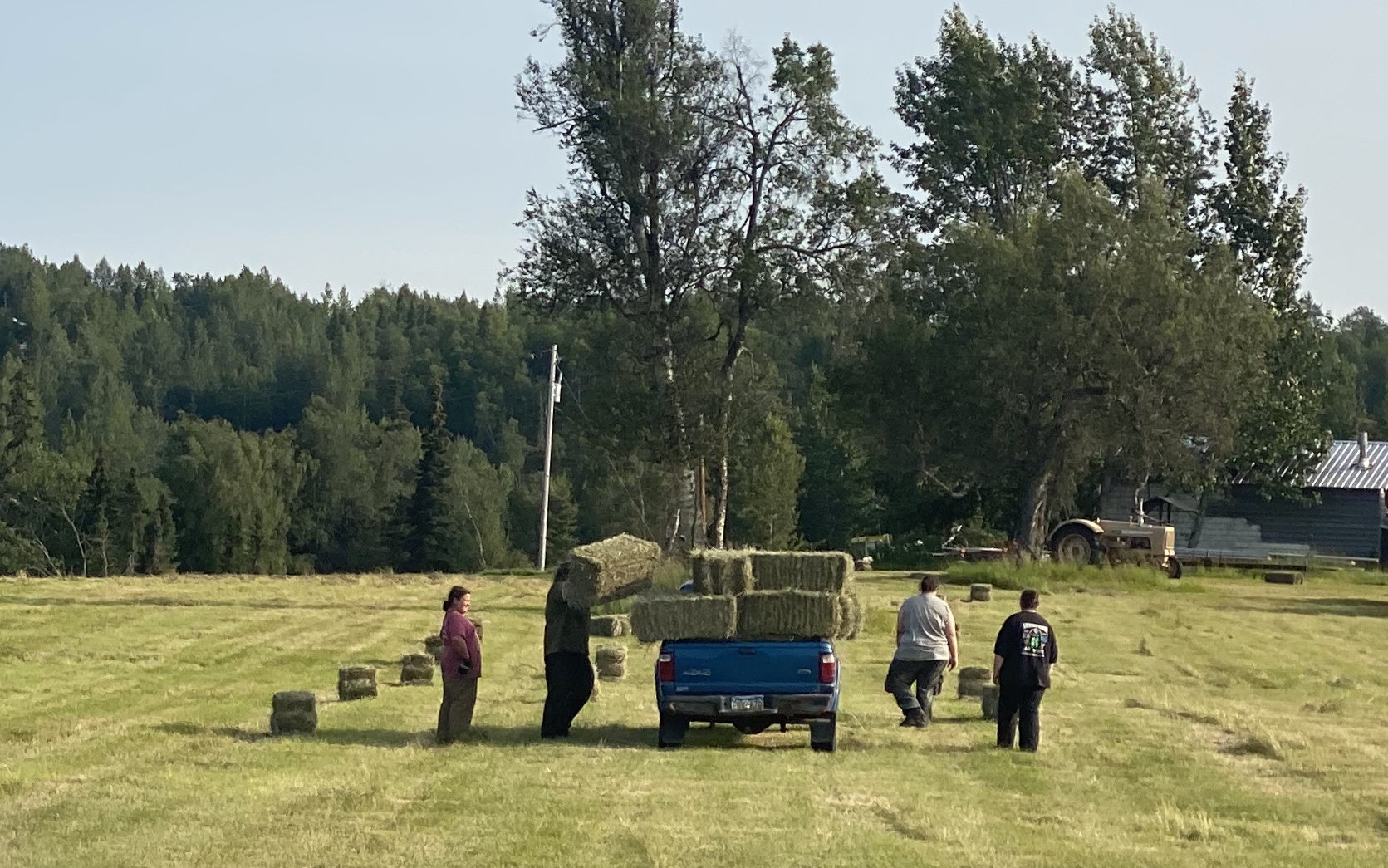
I never forgot that, and I began looking for the lessons they learned as we stacked three layers of 15 bales of hay on an 8×12 flatbed trailer in July, and how many bales we could add if we brought an extra pickup and horse trailer along. We had it down to a science, including the bucking and stacking and ratchet-strap part of tying them down for the hour-long trip home, and imagine what it did to our math when a friend offered up their huge flatbed trailer that could easily haul 200 bales!
How many bales for a whole winter did we need for a pony, two miniature horses, and a small herd of goats? And one farther, what was the winter going to be like this year and how many cold snaps do we need to plan for to get us through until next July? How many more bales will we need now that little sister’s flock of sheep has been added to the farm?
See how that math comes into play? All in the middle of July.
They didn’t quit learning on Saturdays, or in June, or July, or August, or when we’d opt to take a day off to read Black Beauty around the campfire because the snow was finally melting and after a long Alaska winter we just wanted to be outside, and the book was so engrossing we just ended our school year on April 24th so we could finish the story and learn how to build fires and break down trees that had fallen in the windstorm back in November, and so we just burned the brush and read the book, and did you know that Black Beauty is one of the best-selling novels of all time and that Anna Sewell wrote it from her bed where she spent her last years, and that she died just five months after it was published? Or that it was written from the perspective of a horse who dealt with abuse and ways of training no longer in use today because that book highlighted ways of animal treatment that were wrong, and that horsemanship has been changed because of it and also that writing from an animal’s perspective while using human feelings and emotions is called anthropomorphism?
Those are the lessons you all learn when you’re not worried about being tied to the lesson plan.
And I have four adults now who know how to buck the hay and load the trailer and tie it all down and haul it back to the farm or through the mountains, and all I ever had to do was drive the truck slowly through the hayfield and read to them and make sure good music was on loud and the lemonade was cold, and that everyone had at least one glove to keep both their hands from getting blistered.
They know a good book when they read one, and they can write from an animal’s perspective, but more importantly, they know what their animals need because they fed them and cared for them and read books about them and used their hands over the course of each of those animal’s lives, and their deaths too.
Those lessons happened on school days, and Saturdays, and summer days, and all the days in between. The lessons are there, no matter what day it is, and when we let the lessons happen and talk about it a bit and build it into their lives, you may not be able to write it down on paper, but you’re teaching them. Rather, I should say, they’re learning. And those are, in my opinion, the most important lessons they’ll ever have.
3-Make a schedule but be prepared to pivot. For all of the above reasons, I have learned that a schedule is a sketch of what you’d like it to look like. I tried the 15-minute break down, then very soon after tried half-hour-segments, then finally realized what worked for us was Bible and Chapter Book over breakfast while their mouths were busy and their ears were open. After we cleared the table, we followed with Math and Language Arts, and then a little read time for History and Science, which led to lunch, followed by maybe another quick chapter, then a quiet time of independent reading or listening to an audio book, with afternoons going to an art project or science experiment or cooking and cleaning before dinner.
That was what fit for us. I learned to make a sketch of a schedule and I’d try to follow the flow each day, but I learned quickly to not be a slave to it, and to be prepared to pivot because there might be bigger learning than the lesson I had planned, like when a farm friend calls because she’s out of town and her neighbor called, telling her one of her cows had hooves of a calf hanging out, and you have your whole crew packed up in seconds, and five minutes later, your pre-teen is pulling a healthy calf, making sure mom and baby are bonded, and you’re watching it all unfold and you’ll never forget that moment because everything your boy learned from books he did with his hands, and if you’d made your family a slave to the schedule, you would have missed that test.
Your schedule is the rough draft, always demanding additions, deletions, editing, and sometimes even, a whole new direction. Be okay pivoting; in fact, embrace the pivot, it’s all part of the big picture!
4-Learn how to outsource. Years back when sharing with an acquaintance how I hated math and barely passed it in high school, preferring language and writing the entirety of my schooling years, I’ll never forget how she scoffed and asked how I considered myself a homeschooling mother. I was far enough down the homeschooling road then to know that even though her comment pricked my insecurities and made me doubt myself momentarily, a degree or specialized area of study—or even being adept at math— wasn’t necessary for me to be a successful homeschool mom. That is one of those misconceptions that falls into the category of the socialization discussion (don’t get me started on socialization, and don’t you worry about it either!). Homeschool parents don’t have to be teachers or experts in order to teach their children.
Had I thought of it then, or should she ask me now, I’d respond by reminding her that starting in junior high, I had seven different teachers over the course of each day, one for each subject. And that in elementary school, we were walked off to different classrooms for music, PE, and even art.
Homeschooling is no different. Homeschool parents are just the ones facilitating the lessons and where they’d like their students to learn. The beauty of homeschool is that this outsourcing can look a million different ways. Local co-ops, tutors, art shops, college classes, 4-H clubs, scouting groups, youth groups, local sports teams or musical groups, work studies, clubs at the library…the list goes on as to where a homeschool parent can obtain lessons and skills (and socialization!) outside of the instruction that happens at home.
Our outside lessons came from scouts, 4-H, youth group at church, online programs for homeschoolers, classes at a local private school, music lessons, and eventually, dual enrollment in classes at the local community college. I taught my children the basics of math, refreshing my own skills right along with them, and over the years, book math was supplemented with uncountable mathematical life lessons like baking, counting actual money, giving them dollars and a budget and a shopping list, teaching them how to write checks and maintain a bank account, how to run a tape measure, scales, and calculate mileage on maps, in vehicles, in planes, and on and on. Their Algebra began in 9th grade when I outsourced it to a local math teacher, and it continued on into college when they started classes there in 11th grade. I didn’t need to be adept at it. I just knew where to find a class for them to learn it.
I am proud to have been a homeschool mom, even though I didn’t know it all, and even though I’m not good at math. As a homeschool parent, we don’t have to know it all, we just have to learn where to find it. Practice saying this: “I outsource!”
5-Use your partner! If you have a partner in homeschooling, use him/her to their greatest strength! My husband left logistics and details of the homeschool to me, but he was very much involved, more than he realizes, I’m sure. While at first, his role was to worry—worry when one of them placed low on standardized testing in math in the early years even as they placed high in reading and science; worry when his wife decided to end the school year on April 24 one year, saying she was tired and burnt out and so were the kids and they were just going to sit around the campfire and read Black Beauty for the rest of the spring; worry when I’d get stressed or overwhelmed; or when we’d approach a season in which I felt like it was all crashing in on me.
As a couple, we were learning too, and it didn’t take long before I realized it didn’t all fall on my shoulders, even as the parent who stayed home with the kids. We were in it together, and my husband had amazing skill to bring to the table when it came to the education of our kids, and that it wasn’t a far reach at all for it to be part of our homeschool, because it was what he was already teaching them as their daddy.
Building projects were Daddy’s wheelhouse. Nature and outdoor survival…that was all on Dad. Lifting huge weights and learning how to use your body to move mountains? Dad’s on it. Driver’s Ed? You KNOW Dad’s got more patience and you’ll live longer with him in the passenger seat than you ever would with Mom over there.
Those are some very concrete lesson areas where our family KNEW Dad would be taking the wheel. But there are so many other hundreds of ways in which I relied on my husband to be the heavy hitter in teaching our kids, even as he worked 84-hour weeks in the oilfield. There were so many micro-lessons too, that raised them into the adults they are, too many to list, really: how to buck hay with a strong back and stack it neatly and safely on a trailer, securing it all and driving it across miles to unload it into the barn in a way that’d allow it to dry without combusting and starting a fire. Or how to check the oil on a vehicle, or diagnose engine troubles, or when doing a rebuild, how to pull an engine, do an overhaul, and replace it in order to have a rig that purrs like a kitten. Or how to find the best deal for the dollar you’ve worked so hard for. Or how to fell trees or start a fire or cook a meal that will fill a table full of hungry kids when their mama is too exhausted to think of what to feed them.
My husband taught our children so many life skills I never could have, all squished around the hours I had with them around the table and desks and couches. I wouldn’t bother to list out the weights on paper, but if we ever did, I know it’d be a close run on which of our lessons were most valuable. I taught them how to count and how to read and how vinegar and baking soda makes a volcano, and how to recognize good literature and write it too, but he taught them how to be a hard worker and how to give a proper handshake and how to love a woman in all seasons of life and how to provide for your family and how to serve with your strength, even when you don’t feel like it.
Your partner brings skills to your homeschool that the two of you may not even realize they are bringing; it is up to you to rely on those strengths and utilize them to the highest degree, because those are the lessons that will echo loudly throughout your student’s whole life.
6-It’ll be okay. I promise, it’ll be okay. Everything you think you’re doing wrong…if you’re homeschooling for the right reasons, and not wanting to lock your kids away from the world and keep them in a closet and away from civilization…(we hear about those families, and I’m trusting that those who are reading this aren’t those families) it’s going to be okay. If you are homeschooling, I’m guessing it’s because you want to provide them with the kind of education that will best teach them the values and ethics you believe will give them the best leg-up in this world and help them grow into productive members of society.
Teach them to read: good books and poems and the news. Teach them how to do math in real-world scenarios. Teach them to love music and art and how to make it, or at least how to listen to it and see it and see the value in all of it. Teach them HISTORY. Of the world, of our country, of their family. Teach them how to think critically and not follow the crowd and how to form an opinion of their own. Teach them how to write. Strong sentences, strong paragraphs, strong papers…how to express their feelings on paper and back it up with sources they’ve found from research.
As for the rest, if you don’t get to it, I promise you, it’ll be okay. You’ll make mistakes and you’ll lose your temper and maybe even sometimes your mind. Show your kids grace. Show them what forgiveness looks like during those times when you get frustrated or overwhelmed and you mess it all up. You’ll doubt yourself so often, and you’ll wonder if maybe they wouldn’t be better off if you let someone else do it. I can’t count how many times I threatened to call the public school, and my youngest still remembers the time I DID. Hug them, love them, apologize when you’ve messed up the day, or the mood, or their heart, show them how to apologize and make it right when they’ve wronged another, show them what it looks like to live real life in real relationships, and how to handle pressure and problems and hard times along with all the good times. Pray with them and pray for them. Lay your head down at night and start the next day fresh. They are learning how to do life while you’re teaching them how to read and write and do math. It WILL be okay.
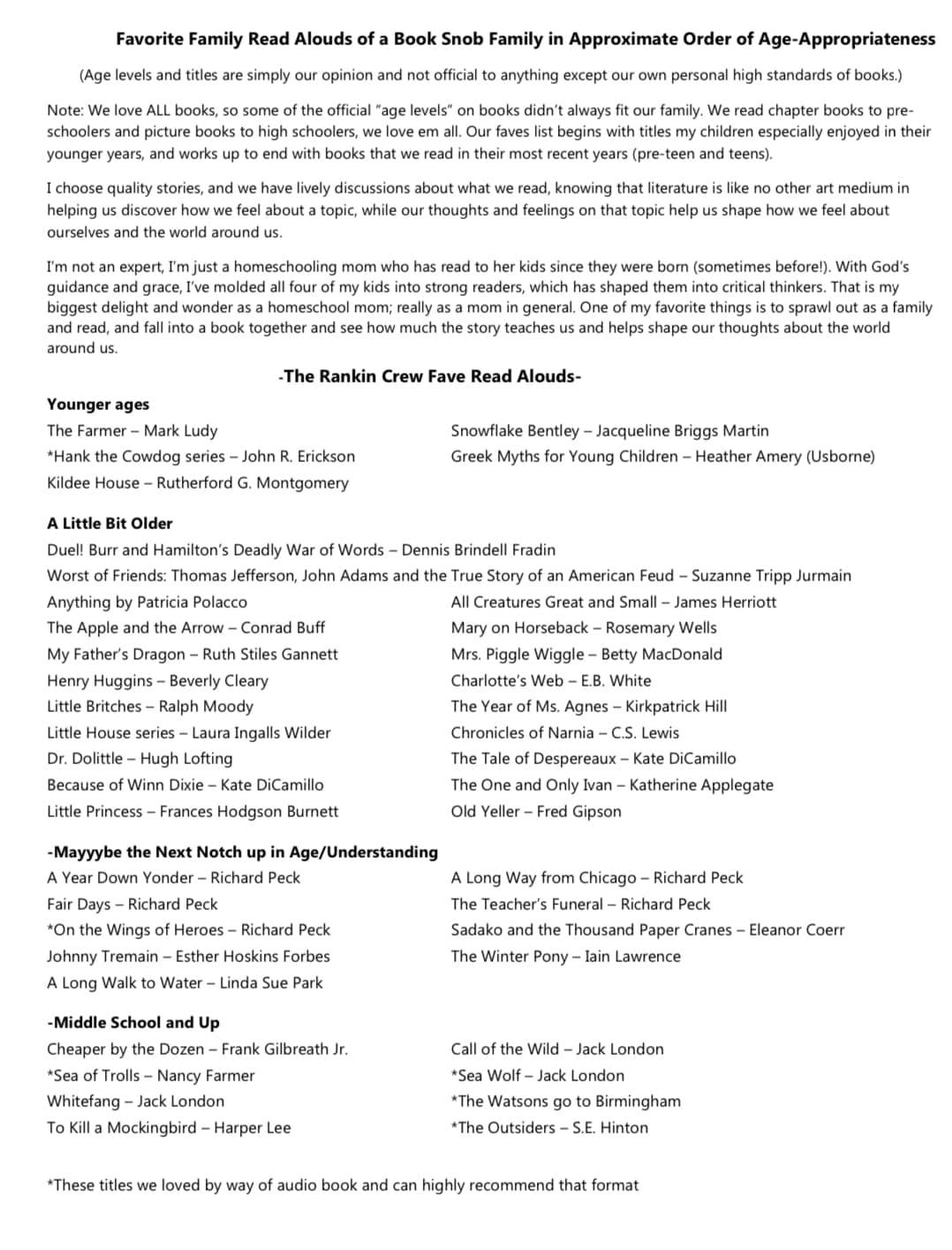
7-Read aloud to your children. Have a dedicated time in which you read aloud to your children. We always had a chapter book going of good, quality literature. The classics, good series, anything that had a story line we could discuss and characters we could get to know. I read to my children as babies and all the way into high school. When we’d go on road trips, we’d listen to audio books. It gets more challenging to have a time to read together when they are in their high school years, but even now as adults, we’ll still discuss the books we read as a family, and they still love it when Mama reads aloud.
There are precious life lessons in literature, and there is power in reading books together and learning as a family. Most times our history lessons would center around a book we’d read aloud, then we’d study that era and geography, but we always had a separate chapter book going too that I’d read to them just for the sake of a good story. Reading out loud was a huge part of our homeschool and I miss that time terribly. Make time for it, there is high value in it.
8-Make reading for enjoyment a thing. Somewhere along the way, back in the 80s I think, programs popped up that awarded students for reading. Prizes of pizza and ice cream cones, and when my kids were young, there were similar programs. One year our local library had a reading program, “The One Hundred Club” or something like that; the kids could get a check mark for every 20 minutes spent reading, and by the end of the month they could get a prize if they had one hundred minutes.
Not everyone likes to read. But why is that? Could it be they’ve never been introduced to reading for enjoyment? Or they’ve never been allowed to read just for fun? Or, if they have trouble reading words on the page that they’ve never been taught tricks to make reading easier, or how to listen to a book being read aloud or on audio? Stories are amazing, whether we read them on paper or listen to them out loud, and the enjoyment of them shouldn’t be a chore or something to check off a list. My kids are all voracious readers, and that is because I taught them to love to read. We did the checklist reading program one time, and they had their hundred minutes checked off on the monthly sheet in a matter of two days. Make reading together and individually a priority. Build time into your days for reading. Make it enjoyable for your students and you won’t ever have to worry that they’re reading enough.
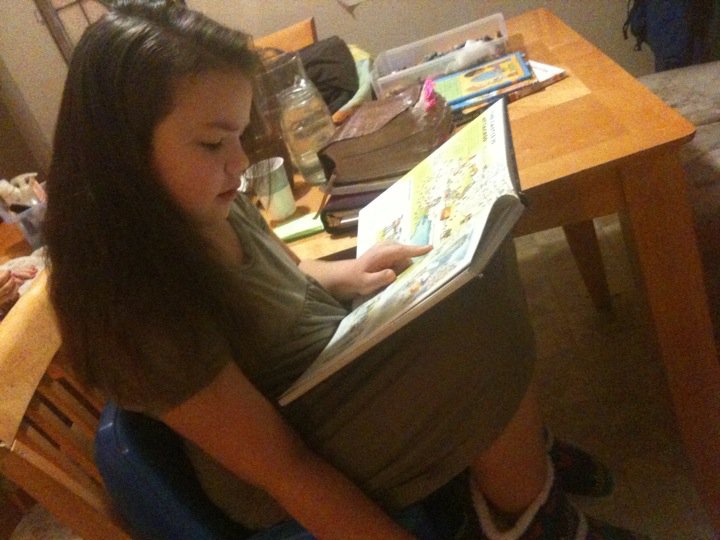
9-Utilize the library. From a very young age, my kids were familiar and comfortable at the library. We had regular library days and they got library cards when they were young. For one of our early years when they were all still under the age of 12, their English lessons were based solely on library books. I’d have them choose a topic to write on, let them collect as many books on that topic at the library as they wanted, and they’d study their topic and write a one-page essay on it. While that sounds very simple, what was happening during this easy time of no-curriculum was: they learned the Dewey Decimal System; they learned how to formulate an essay (my older students), or a paragraph (my younger students); and they learned how to share with clarity information they had learned. The library is a magical and powerful tool in your homeschool and in the minds of your children.
10-Make them play outside. This came naturally since we had a farm and my kids loved to play outside with their animals, their friends, with one another…but I know that things have changed in the last decade. Phones and iPads are more prevalent for kids today and much of homeschooling curriculum is screen-based. We were never a no-tech family, and my kids love streaming or a good movie, but there is nothing like playing outside to grow a well-rounded kid.
Let them build forts or mudpies or hang a hammock in the woods where they go read or do their schoolwork. One of my favorite memories is my girls lying on the roof of the chicken coop, working on their math workbooks. Kids need sunshine and mud puddles and green grass and stretches of time to explore. The outdoors is one of the main ingredients to growing a kid.
11-Let them be bored. Life isn’t always a party and it’s good to know how to entertain yourself. Math isn’t always fun. Writing a paper isn’t always a trip to the zoo. Every lesson or every day or every trip to the grocery store won’t always be wild and entertaining. Sometimes you’ll be bored, and sometimes they will be too. That doesn’t mean you’re doing something wrong, that just means they’re learning how life comes with an ample dose of the mundane and you don’t need to be entertained every second of every day.
We live in a world of constant brain-candy by way of our phones and snippets and texts and reels, to where we might think a little down time or an afternoon of chores will bore our kids to death. Let them be bored. And if they complain about being bored, tell them you’ll find them something to do. That will get them outside playing and using their imaginations. Sometimes it’s the boring times that lead to the most exciting: curling up in the hammock with a good book, building a fort out in the side yard, or, one of my favorite boredom busters, the “Remedy Stand” my kids made out in the woods using two stumps for stools and an old downed tree for a countertop where they mixed up remedies using mud and leaves and sticks and rocks…any kind of remedy you’d need, some for the animals, some for mom and dad, some for one another, some for the world. It was where they thought of all the problems imaginable and worked to fix them, and I have no idea where the concept came from other than they must’ve been bored one afternoon. Boredom isn’t a bad thing.
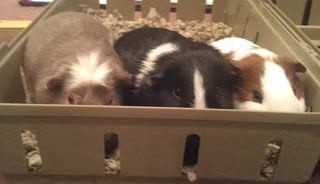
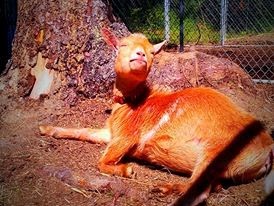
12-Get them an animal. We had a little farm that started with guinea pigs, then a couple rabbits, then a few chickens, which eventually led to miniature horses, a couple goats to keep the minis company, then a pony, and of course, always dogs and a cat or two. That eventually led to them raising animals in 4-H for show and for market, and we’ve had lambs, ewes, rams, sows, gilts, barrows, turkeys, pheasants, and even a steer one year.
Not everyone can or wants to go that route. We’re at the season of downsizing now that the kids are grown, and I can’t imagine ever having as many animals now that we once did. I don’t want to work that hard. But I can say with one hundred percent certainty that my children were enriched in ways they would otherwise not have been had they not been caretakers of animals. There is something about caring for another being that develops responsibility, confidence, and empathy in a kiddo. They have to look outside of themselves and be responsible for the care and health of another living creature. There is no other lesson like it. Whether it be a goldfish, a guinea pig, a rabbit, a parakeet…it is my firm belief that every kiddo should have an animal to care for.
The caveat to that is don’t just bring your kiddo an animal and expect them to know how to care for it. Have them research. Breeds. Feeds. Equipment they’ll need. How the animal’s digestive system operates and how their vision works. Its anatomy. How they reproduce. What kind of environment is best for that animal to thrive. Whether a single is okay or if they do better in pairs. Foods they enjoy and foods they absolutely can’t have. Basic health care and when to take their animal to the veterinarian. Having your child learn all of these things will give them a sense of stewardship and commitment for their animal and will foster bonding while growing your child’s sense of responsibility and expertise. There are no book lessons that compare to the real-life lessons of animal husbandry.
13-High school isn’t as scary as it sounds. When all my kids were young, all four nestled between the ages between six and ten, I thought I’d found my sweet spot and that I’d finally gotten the hang of homeschooling. During those years, high school was far off, looming in the distance and something I didn’t allow myself to think about too much lest I chicken out.
Then, when eventually it came, I’d been homeschooling nine years and maybe I was numb and nothing fazed me anymore, or maybe I was just naive, but I just took it in stride like I did everything else as a mother (we have to, right?). I went to the orientations and I researched what fit my kid, and I took out my pencil (ALWAYS a pencil when it comes to high school planning!) and he and I scratched something out and we got to it.
It sounds simple, but really, it’s not as scary as it seems, and now, after graduating four, I can confidently say they each received a well-rounded high school education in which we utilized the local community college for the heavy academics I needed a little help with, and they honed their independence during those years, building on their foundation from earlier years to develop a knowledge base and skill set they’ll use forever on their adult paths. It’s not as scary as it seems.
14-Build a quiet time into your day. 2-4 pm at our house every day was Quiet Time. It evolved from when my first two were really young and I was really pregnant. We’d all go snuggle up on Mom’s bed with a stack of books and I’d read to them until I dozed off. They’d rest there with me while I took a catnap and they read their picture books. Later, when I had toddlers and young students, we’d all have lunch, and I’d read to them from our chapter book while they were eating, and then we all took Quiet Time. I used this time for me, but it ended up being so valuable for them, too. When they were young, they’d nap, but as they got older, they’d read or listen to audio books or Adventures in Odyssey or Your Story Hour CDs, and it was just a time for everybody’s bodies and minds to rest. I clung to Quiet Time religiously, and even as they got older, once school was finished, before we shifted into dinner prep and evening tasks, we’d always have an independent time where they knew that was their time. Make sure you have quiet times build into your schedule! It benefits everyone!
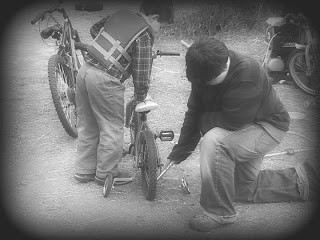
15-Teach life skills. In hindsight, life skills were always gold standard for anything we did. We had a joke around the house anytime we’d get distracted from book studies to handle something on the farm or at the house; we’d all chime in with the line I’d come to use to offset the aggravation of getting waylaid from the routine yet again: “Life Skills!”
Truly though, now, having four adult children, I look back and see that while there was such deep value in the books we read, the discipline of math problems, and the creativity unfurled during writing and art projects, it’s the life lessons that carried them into adulthood. Things like learning how to do chores (household and farm); automotive basics; writing checks; how compounded interest works; keeping a bank ledger; counting back change; backing up trailers; how to use hand tools and machinery; the basics of electrical work; cooking; how to budget and grocery shop; finding the best deal for your money; and my kids will even tease me about how I taught them how to play poker, calling it a life skill. All those times the routine-freak in me thought we were blowing off book work, but really, we were teaching them how to function in life and take care of themselves and their future families. Life Skills is where homeschooling really shines.

16-Teach them about Jesus. I know not everyone will agree with this one, but as a Christ follower, I would be remiss to not talk about Jesus and the high role He had in our homeschool. My husband and I were fairly new Christians when we made the decision to try homeschooling during the season in which we were growing our family. I am not sure I will ever be able to fully express how much my faith and trust in Jesus guided and sustained me as I raised my children and tried to teach them all they’d need to know to survive in this world, and how to be part of the one beyond.
We read the Bible together. We’d call our sweet, wise Pastor Robert when we’d stumble on a chapter or verse I didn’t know how to explain, and I won’t ever forget setting the phone down on speaker in the middle of the table and having a Bible lesson right there after breakfast with my kids and Robert. Some of the deepest discussions and lessons in life came as a result of us reading through the Bible together. We’d spend time on all of it: war and the dark side of mankind; rape and incest; family lines; creation and history and science of the natural world; the miracle of life; what forgiveness looks like; good versus evil; grace…what I didn’t understand or what they didn’t understand, we’d learn together.
We explored what different religions believe, what historical experts say about Biblical places and events, what science says about life and its origins, what it means to follow Jesus…our faith dovetailed with our homeschool perfectly and I taught them to read, to question, to ask God, to pay close attention to science, and to measure it all with the yardstick they’d been given from their maker and their learning.
Not every homeschooling parent is a Christian, and that’s okay. I’m not here to convince you to be, although I’d love it if you were, because as I read Scripture about what it means to be a Jesus follower, it means we are all family. I won’t say teach your kids about faith in A, B, or C god either, because I believe Jesus IS the One to have faith in. I’ve read the whole book through enough times and studied it and the history of that time enough to know that the Jesus of my childhood —that old story I thought was just another fairy tale—that He really did walk this earth and that His story is true and that it brings us directly to the face of God, the creator of the heavens and the earth. Of that, through my studies, I am convinced.
I tried to weave that into days and our homeschool the best that I could, and while that will look differently for everyone, and while you may have no desire to teach your children about Jesus, He has sustained me in ways I will try to express through my writing for all my days, but as it pertains to motherhood and my little homeschool, what was etched on my heart came from the book of Isaiah, chapter forty, verse eleven, the second part: “He gently leads those who have young.”
I clung to that and trusted in that, and I taught my children about Jesus and good and evil and how He overcame it all with giving His life for humankind and that God was a father even stronger than their Daddy and that He was gentle and kind and that He cared about them and their lives and that they have a purpose and a plan and a way to live every day that they are on this earth. I love Jesus, and I taught my children how to learn about Him, how to weigh the facts and the history, and how to listen to the Lord when He calls. It is my hope that they will always hear Him and listen to Him, and that all parents would teach their children the same.
The final items on my list are feedback from my four students.
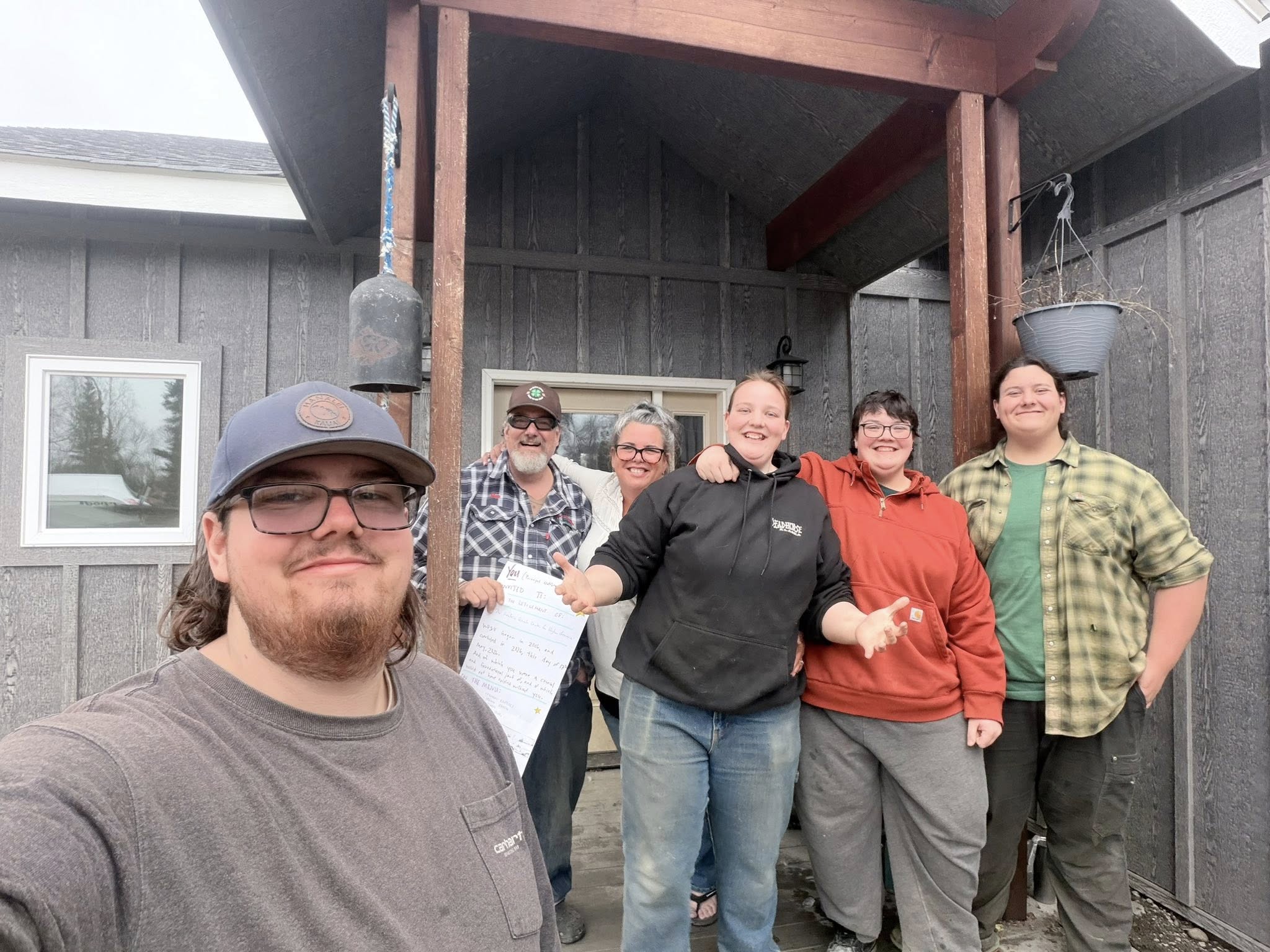
On the weekend after the final day of my last student’s high school career, all the kids were home, my graduates from 2020 through 2024. I asked them to help me retire our homeschool, more for me than for them; finishing one of the very best chapters of my life requires a bit of ceremony and a turning-of-the-page. We all enjoyed Graduation Sunday at church, we had library day after lunch and it was delightful; I even gave them homework and told them they could check out as many books as they wanted as long as they got their homework done. 🙂
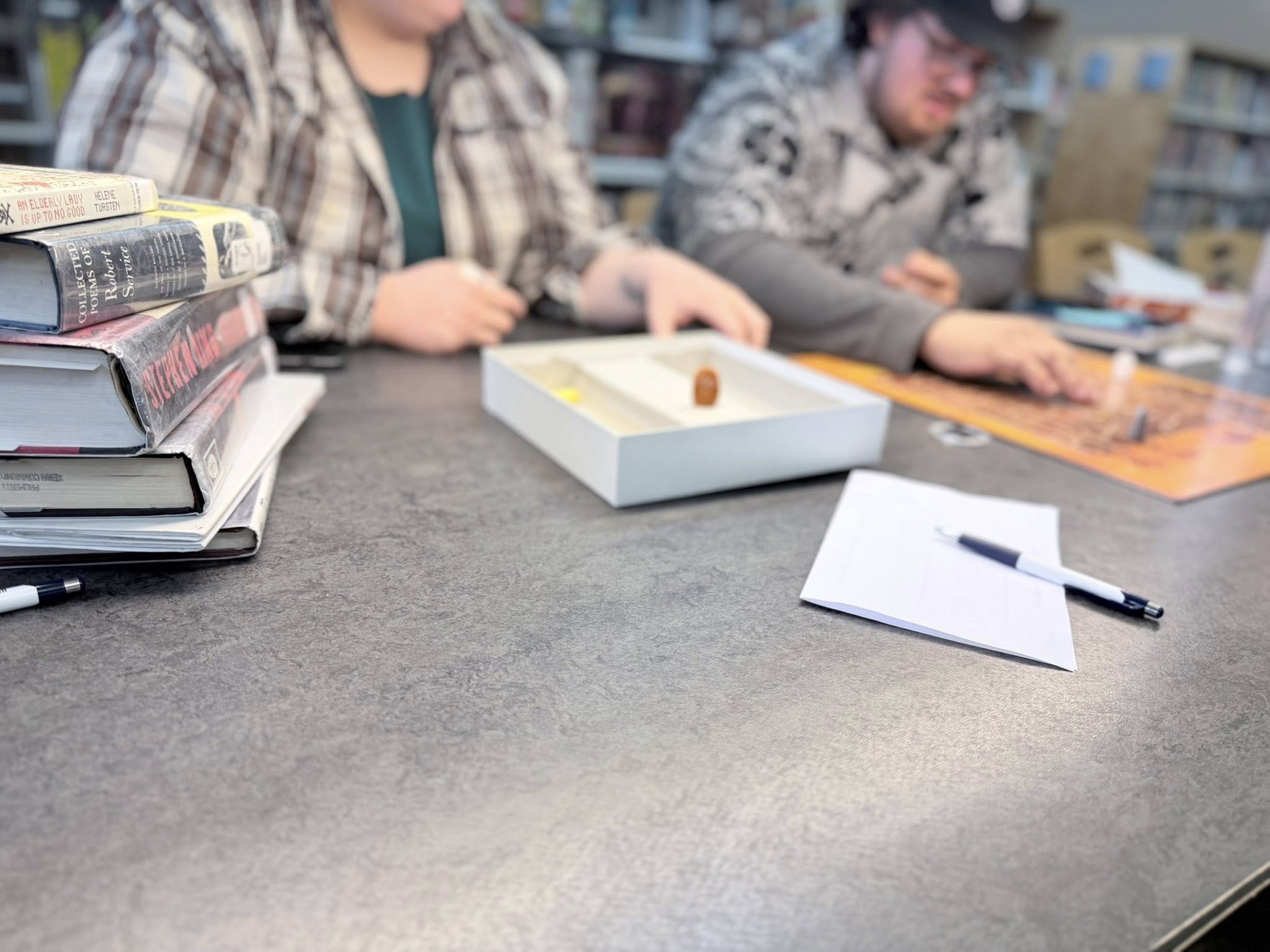
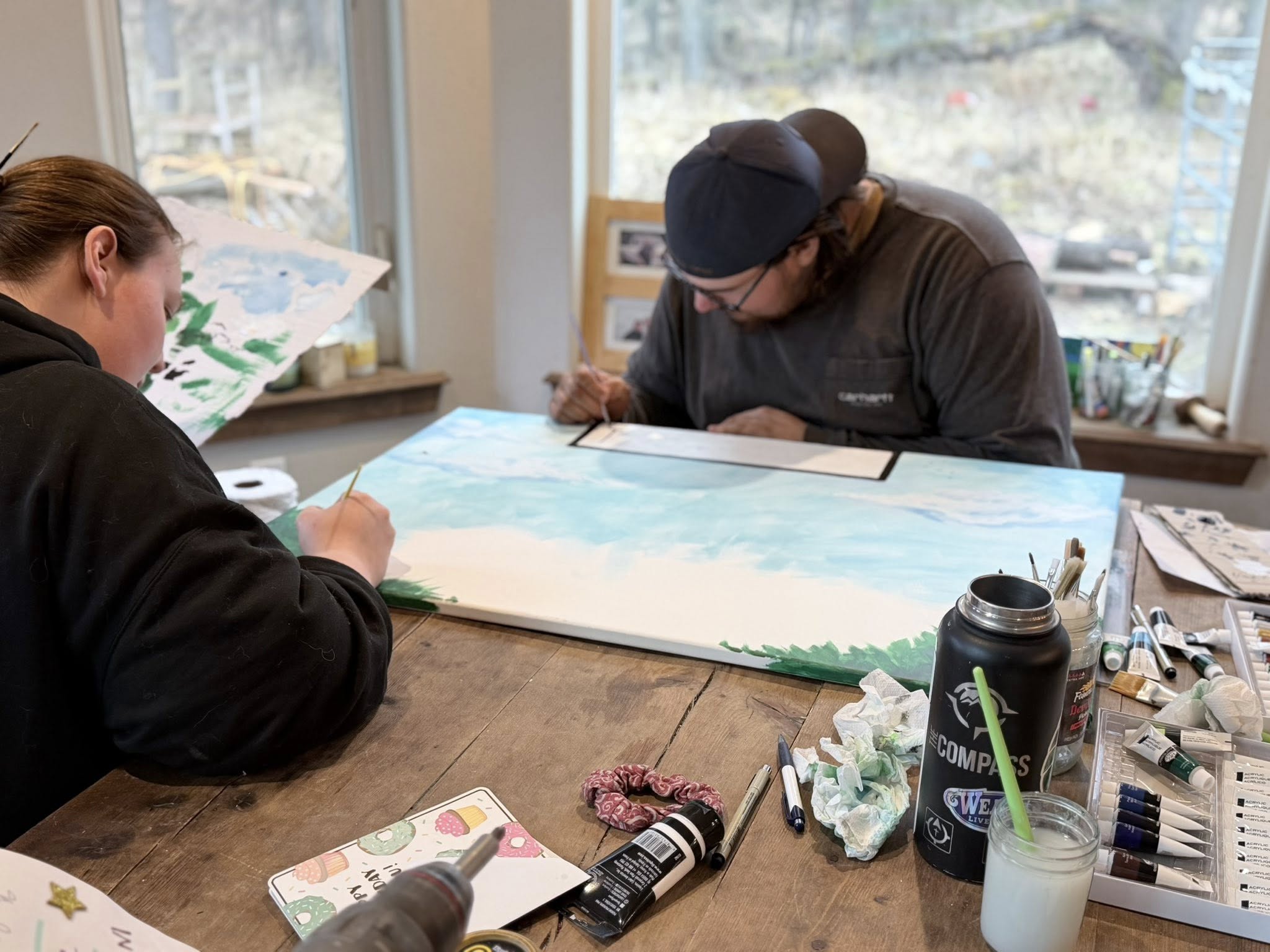
It was a beautiful day. We had a Veggie Tales marathon and took a million homeschool-retirement photos and had fun artwork time in which I had them sign a framed photo collage of all of us and recreate an old mural we made when they were little. They were into it more than I thought they would be, and maybe it was because they love their mama so, or maybe it was because they really did love our little homeschool, but it was precious to see my adult children working together on the artwork, checking out stacks of library books, and coming together for the last of them graduating. I won’t ever forget that day, and I am thankful for their memories and articulation of their homeschooling years.
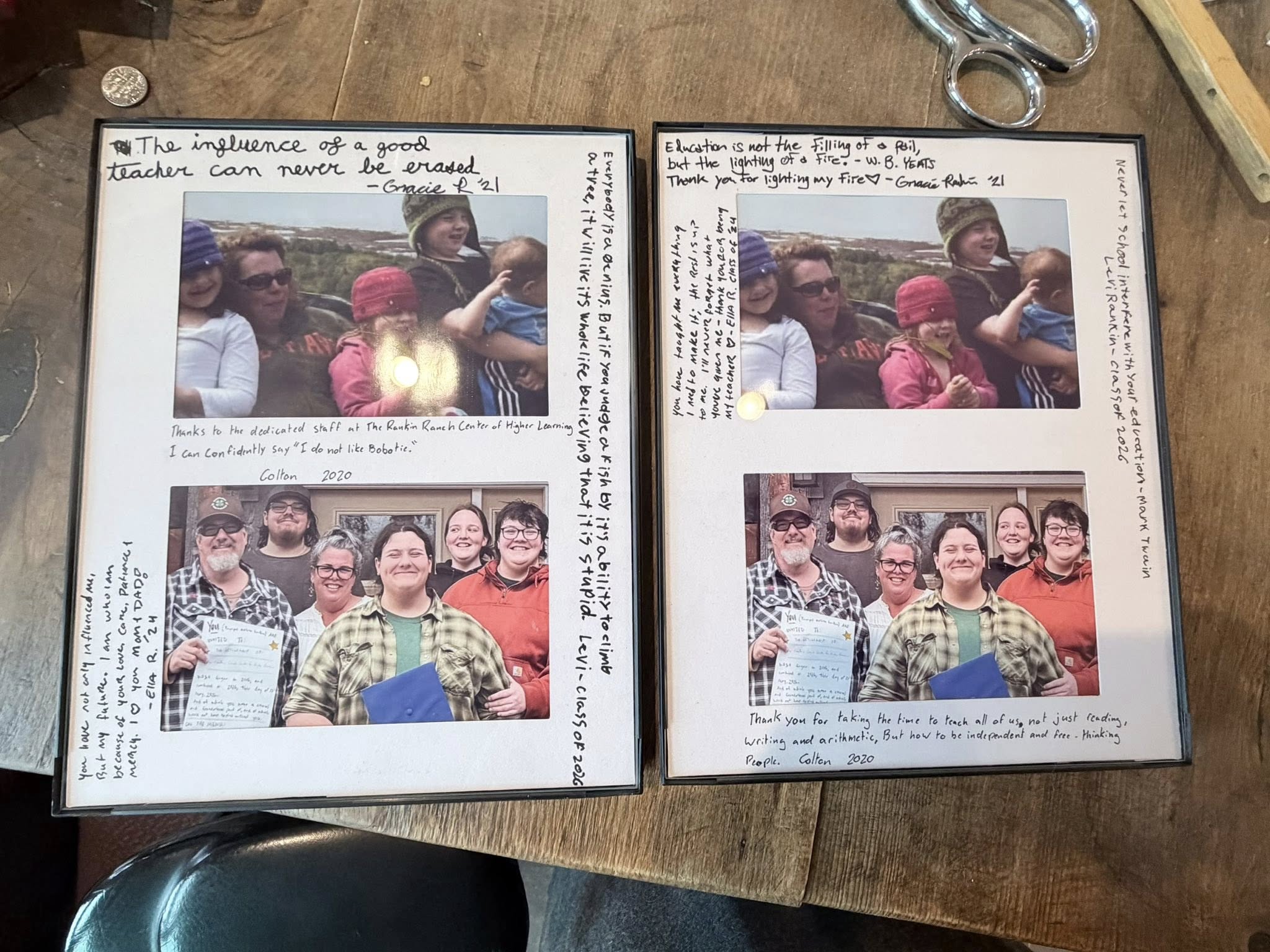
Rankin Ranch Center for Higher Learnin’: A Reflection
17-(1) What are some of your favorite memories as a student in our little homeschool?
Reading books
History dinners
Field trips to museums and all the other places
Math in the kitchen (Whoah!)
Fair trips to our fair and state fair
4-H nationals trips
Jumping on the trampoline
Reading and drawing at the table
Pancake breakfasts
Morning chores with everyone
Quiet time
Multiplication tables on the trampoline
18-(2) What are some of the things you have carried into your adult life as a homeschooler?
Self-motivation and discipline
Time management to get the lame stuff out of the way
Not spelling lol
Grocery math skills
Writing skills
How to understand the Dewey Decimal system
How to operate a small-scale farm
The fives multiplication song
Adaptability
Respect and integrity
Hard work and teamwork
Sense of family and sharing
19-(3) What book/s did we read most stand out in your memories?
Hank the Cowdog
The Bible
The Winter Pony
Richard Peck books
Robert Service
Chronicles of Narnia
The Great Gracie Chase
Where the Wild Things Are
Long Way From Chicago
Snow Child
Annie Spruce
You Are All My Favorites
All Gary Paulsen stories
Little Britches
Fancy Nancy stories
20-(4) What advice would you have for a brand-new homeschooling parent?
Make learning fun and challenging.
Learn how your kid learns and go from there.
Outsource if needed, there’s no shame in not knowing things.
Don’t overthink it, make a plan, revise plan, and try again.
Go at your child’s pace.
Be patient and go with the flow!
Learn with your kids and have fun!
21-(5) What advice would you have for a brand-new homeschooling youth?
Stay focused.
Get your school done then do things outside.
Don’t avoid subjects you don’t like, it’ll pile up and then you’ll have even more work to do.
Find out what you like and explore it; it can become an opportunity for future careers.
Listen to your mom!
Do your homework and learn all you can.
Afterwards, I had a glass of wine and read their homework and cried a little bit. But mostly I smiled, because now that they are all grown and my homeschooling years are over, I could see by their answers that homeschooling was one of the very best things we could have ever done as a family.
I am proud of them. I am proud of me, too.
And I am so very thankful for twenty years of being able to help shape and grow my children while I watched them grow into the capable, hardworking, and smart young adults they are today.
Thank you, Rankin Crew, for twenty of the very best years. It has been the joy of my life to learn, read, sing, dance, play, work, and create with you. I am so proud of the adults you have grown into, and it delights my heart knowing where and how it all started. -Mama