It has been five years now since my husband almost died. He had dwindled slowly over the summer. The morning he woke up and couldn’t see was the morning after his third night of fevers that had approached 105*, and after he refused to let me take him to the hospital, I threatened him with an ambulance if his temp didn’t come down in twenty minutes.
It did. And he woke up with a normal temperature but no vision so I told him to put shoes on; I was taking him somewhere to finally get some answers. I didn’t know if we were driving to Arizona where I’d started the paperwork at Mayo, the local ER, or his doctor’s office, but we were going to get some answers as to what was killing him.
All summer had been some sort of medical appointment almost every single day. From mid-July on, I’d shuttle him for blood draws, CT scans, specialized tests, and for a brief time, to the Oncology Department.
I won’t ever forget seeing my big man face down on the examination table while the doctor bore an eight-inch screw into the back of his hip to draw out bone marrow. We were discharged from Oncology a week later when the marrow read negative for cancer, but the appointments didn’t stop, and one sunny morning, for yet another medical trip, my husband stepped off the sidewalk and vomited up bile into the beautiful hedges of the hospital parking lot. He felt so bad to mess up the flowers, but he just kept walking.
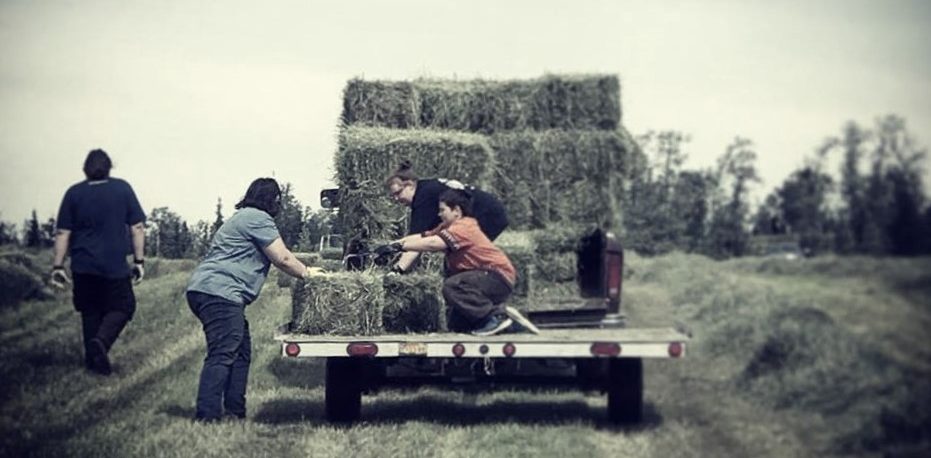
I had a huge work event in early August, our very first Ag Expo, and he powered through almost like he wasn’t dying inside, all because his wife is the 4-H lady, and she gets nervous when her 4-H kids and their livestock are on the move, and he moved chairs and tables and carried my Carmex and made sure I had water and snacks all weekend long, and he beamed at his own kids, and all the 4-H kids too, and he made that first event one that made me want to do more of them, and then he came home and collapsed.
He worked just one more week after that, using every breath his lungs would give and each last muscle in his body, and on the final twelve-hour day of his seven-day hitch, he said, “I think I have to be done.” That was the day I had called Mayo Clinic.
Once he’d deteriorated to the point of no longer being able to work, he slept fourteen to eighteen hours a day. Staying awake for the shortest of phone calls or texts was impossible. Our dog Woodrow took up patrol right next to him, and the two old men of the house napped their days away while I worked on an admission plan for Mayo, Arizona, and researched the internet and kept his PA on speed dial. People from church started calling and relatives from out of state did too, thinking maybe Matt was on death’s door. It had begun to look like he was. The tests all came to a dead end.
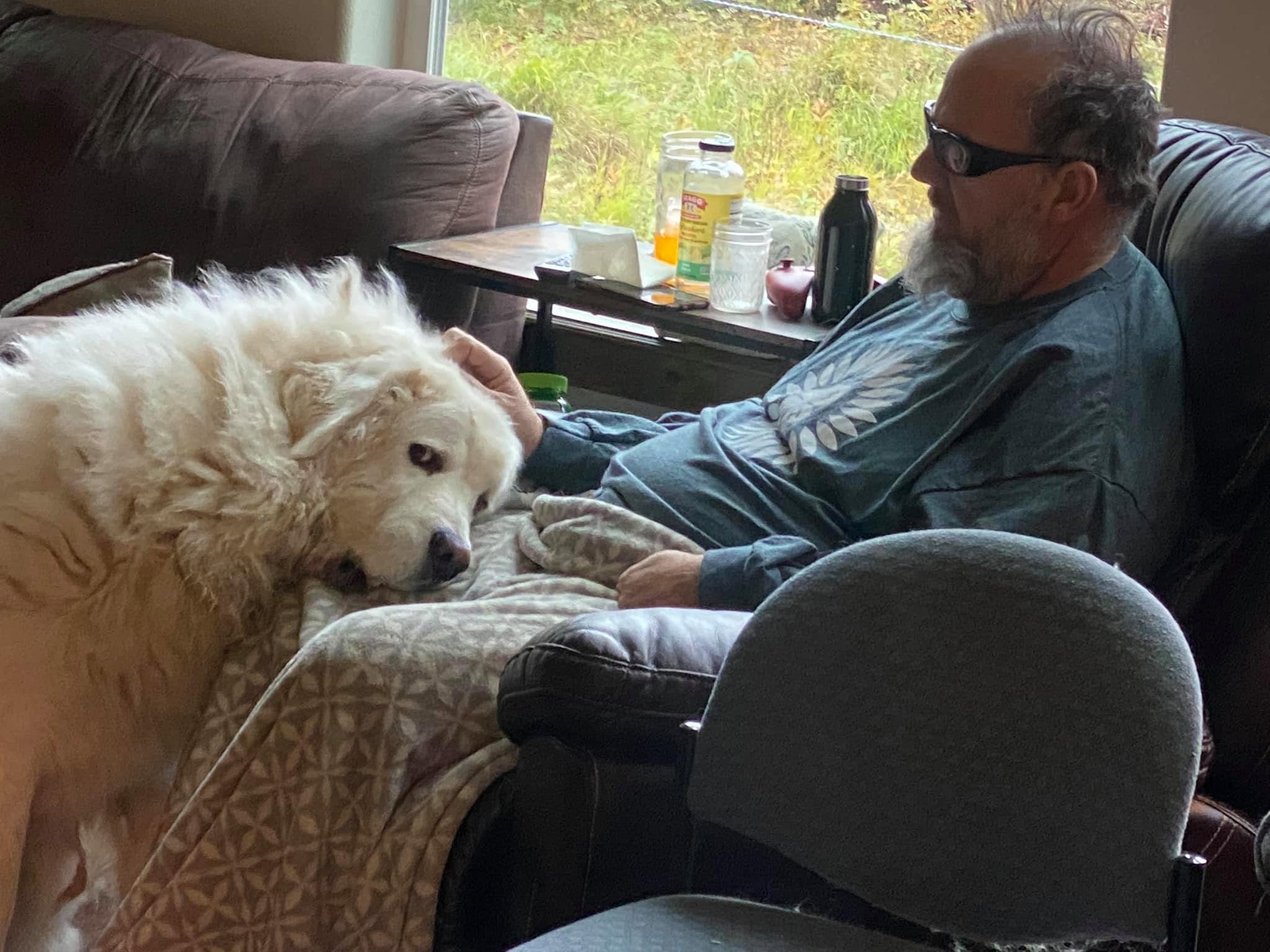
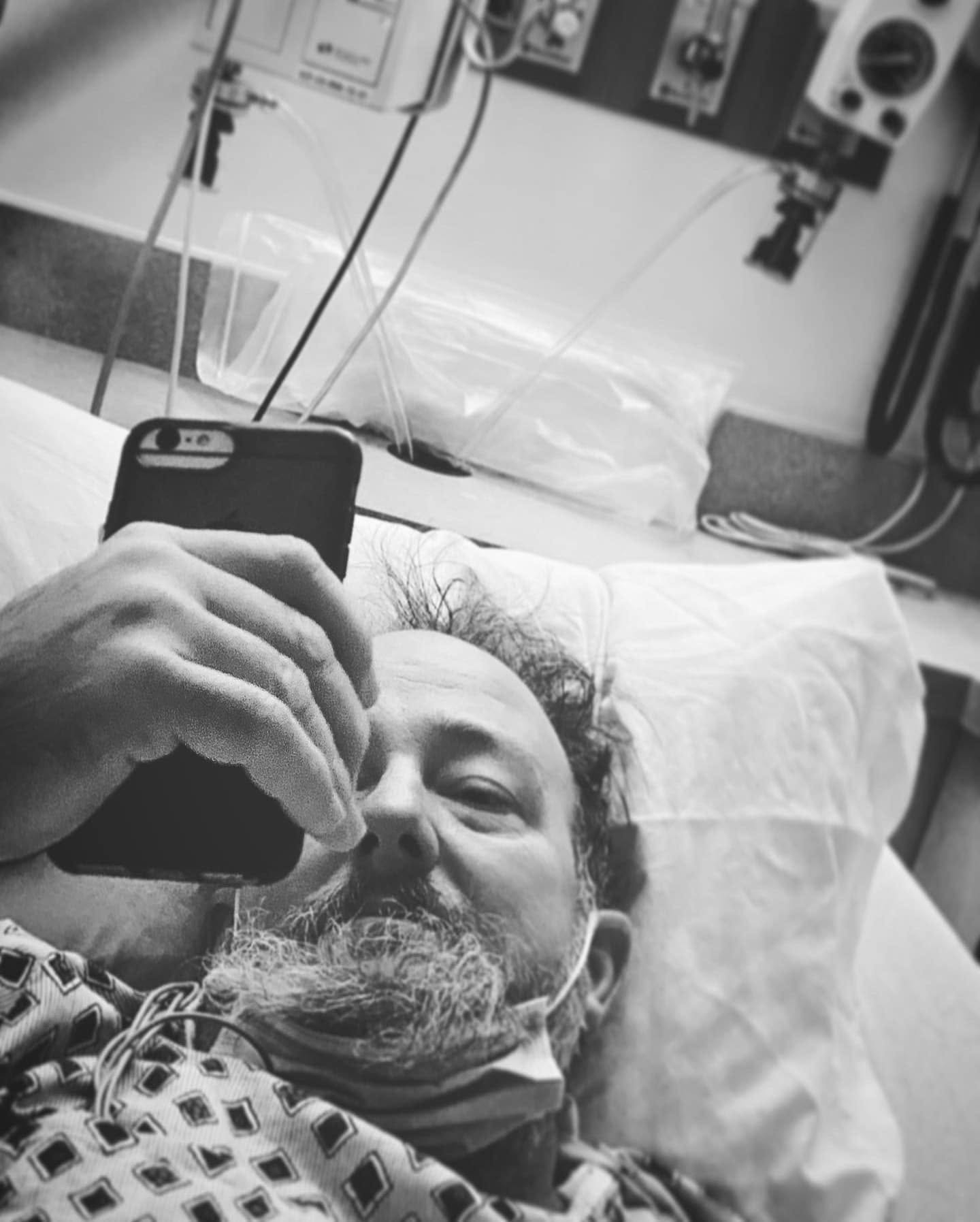
He lost over 80 pounds in under eight weeks. A smaller man would have been skin and bones. While we watched him deteriorate, his PA and I both agreed that with an immune system that was flagging at low to zero, the hospital was the worst place for him until we could figure what exactly it was that he was battling. Our local hospital was packed to overflowing, the hallways filled and the medical system a cluster with that second Covid surge in the fall of 2021.
I was petrified to take him in, but the morning he woke with no vision, I was petrified not to. We had to have answers on what was taking my husband down, and one more night of the temperatures he was having might kill him if the rapid decline of almost every system in his body didn’t first.
Within twenty minutes of his admission to our local ER, the doctor on duty studied all the test results from over the summer, asked to see my husband’s palms and the soles of his feet and officially diagnosed him with Infective Endocarditis.
My kids packed me a little bag and talked to their daddy on Facetime from the parking lot and he cried when he saw their faces because he’d never been so sick in all of his life and none of us knew if he was going to live or die, this unknown illness having taken out the strongest man any of us have ever known.
Somehow there was a triage room for him that night where he slept on a gurney, just like all of those hurting in the hallways and on gurneys too. Nurses are angels on earth.
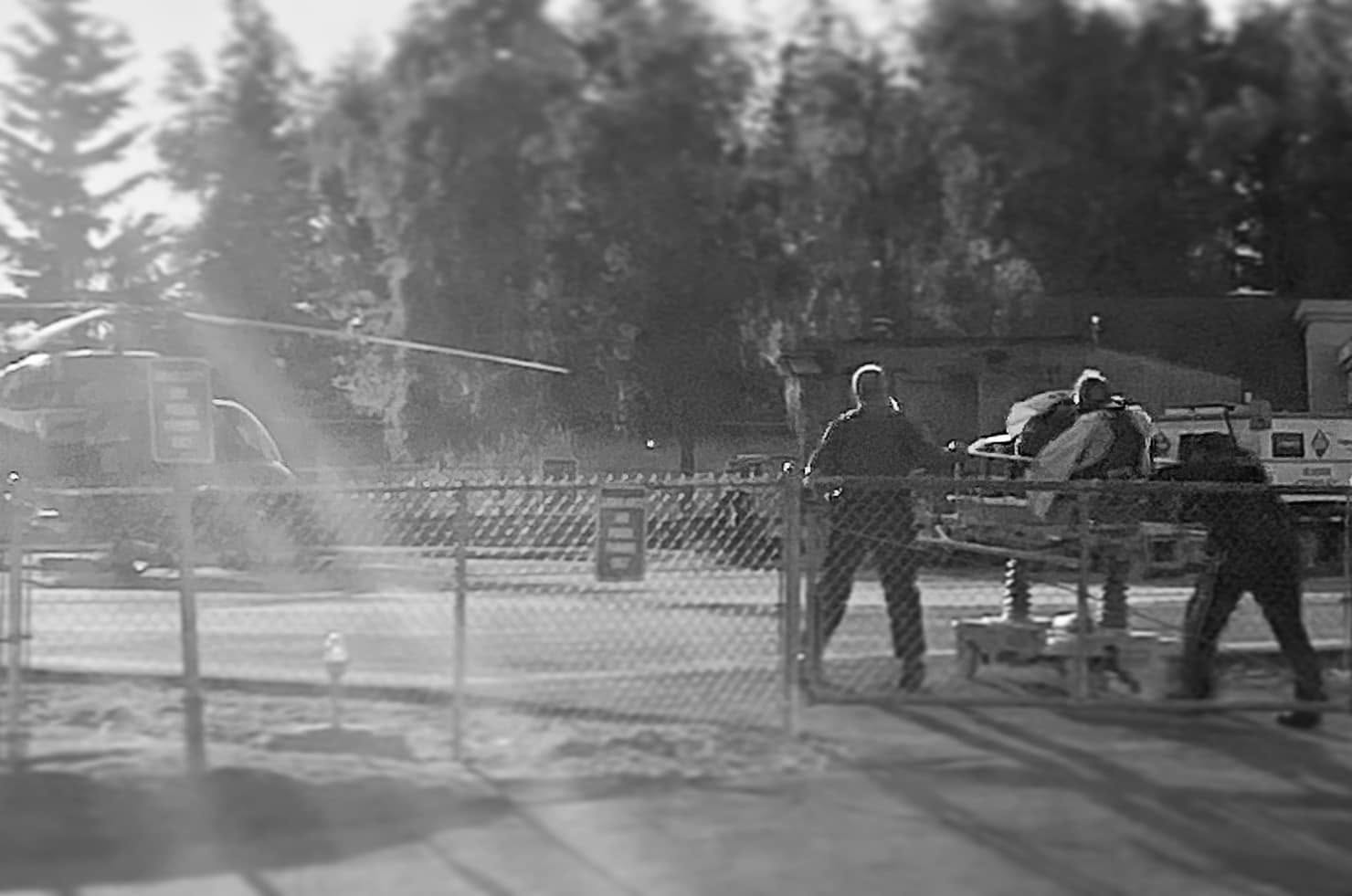
There was confusion in the morning about any beds being open at the big hospital in the city, but the chopper came nonetheless and they loaded him up, and the beautiful morning shift doctor who’d come up from San Francisco told me over his gurney that bringing him to the hospital had saved my husband’s life the day before, and that getting him to a bigger one would save his life today, because Alaska is rural and Endocarditis is something that is not often diagnosed before the patient is dead.
My friend made a video of his chopper rising to the Alaska sky to cross the mountains where we would finally get some treatment for his big strong body that was dying.
I followed the chopper up in my SUV after meeting my son on the road out, him doing an emergency tire change since my scheduled one had gone unmet. He changed the tires in a parking lot, and after some tears and a quick hug, I left for a dark ride through the mountains. My husband’s childhood best friend called me and we both cried, wondering if our big man was going to die.
Four hours later I pulled into the hospital parking lot and calling the nurses station to get directions to his floor, was informed by the tired charge nurse that the hospital was on a no visitor policy and that I wouldn’t be able to see him.
I yelled in shock, apologized, and when she told me there were children on the floor with no parents present, I wiped the snot, and found my way to the hotel room my dear friend had secured for me. I checked in through tears, and the sweet clerk lowered her mask and asked if she could give me a hug. I lived in that hotel room for the next nineteen days.
Covid almost killed my husband.
And he didn’t even have Covid.
We set up a daily regime of Facetime, hourly family group texts, nightly Facebook updates, and constant scouring of online activities to keep a hospital patient occupied and focused on healing.
I spent my days in the parking lot or at the little hotel desk, daily calls at shift change to the charge nurses, petitioning our insurance companies, talking to traveling case managers, medical flight services, shift nurses, my husband, pushing him to sit in his chair, being the soft to his angry, and the anger to his apathy, and each night I would kneel at the side of the hotel bed and sob my snotty nose out to the LORD of Heaven and Earth that He would not let my husband die because of the ineptitude of mankind.
The whole hospital (the whole nation) was full of traveling doctors, nurses, case managers, and physicians. I give his crew credit for getting him the tests he needed to determine the severity of his case, but that’s as far as I can go. The day after his stay began, his (traveling) case manager in charge had me scheduling his discharge to include twice-daily antibiotic infusions for six weeks at an office “near to us”, four hours through the mountains from our home. She didn’t realize the geography of Alaska. She hadn’t gotten the paperwork that the severity of his case had determined the infection had ravaged his heart and that surgery was going to be required, and that the (traveling) cardiothoracic surgeon refused to do the complicated surgery because he’d only been in-state one week and didn’t “know this OR.”
I learned all of this daily information from the parking lot via my husband’s updates by way of Facetime, and the calls I made to the charge nurse each shift change at 7:30 am and again at 7:30 pm. I dropped off bags of chocolate each day to the currier to take up to the nurses on his floor.
Once it was established he would not be having the surgery there at that hospital and that only other hospital in our state as a candidate was full, my husband became a low-priority patient, and in his kindness, he became a low-maintenance patient as well. He went fourteen days without a shower.
Several days into his stay, they quit assigning him a nurse and instead, the charge nurse was his assigned nurse of the day. He was pumped full of antibiotics, which brought his color and lab values back up, his temperatures down, and he was left to his own devices. I worked from my phone to find a suitable transfer for surgery and coordinated the paperwork with his various shift doctors, who continued to let days go between signing transfers.
I navigated our insurance companies and their tiered priority systems; I kept my calm while keeping him and our family and friends in the loop; I found online games for him to play to keep his brain occupied; I knelt by the bed each night, sobbing myself to sleep in prayer, giving my husband’s big heart and his very life into the hands of our Maker, trying to trust Him with outcome, whether it be my husband’s life, or his death.
And under it all I had such anger.
I was GenX. I could sit in the parking lot with my phone hooked up to Bluetooth and eat my lunch ordered via the Door Dash app while being on hold with the insurance company yet again. I could find the apps to play on our iPhones with my husband, him in his hospital bed, me at my hotel desk, and we could be okay for those twenty minutes because we were app-savvy and knew how to put our credit card into our Apple Wallets, lickety split.
My blood went cold when I thought about the sweet elderly who would have no idea how to navigate obstacles. My heart broke in two when I thought of them lying in hospital beds alone, wondering what the next morning would bring. Every single action I took, every single call I made, every single day, I was fueled by the anger I had for the way our whole system was broken. Disfigured. Disgustingly dysfunctional.
Why?
Why were our elderly ALONE? Why were CHILDREN alone?
Our government made such a mess of that time, and while we hear now that they were doing the best they could with the information they had, we know now (as many suspected then, myself included) they weren’t. They almost killed my husband.
I can’t tell you what it does to my heart and my anger when I think about those who DID die.
How many? They mismanaged healthcare, business regulations, the educational system, the populace in general.
The medical crew in charge of my husband’s case botched his care to the point of me having people advise me to go to the media about it or file lawsuits.
Like everyone else during that time, I just wanted to get through it with my loved one intact, and I eschewed those channels to just focus on getting him out to a surgeon who would fix his heart and an infectious disease doctor who would heal his ravaging infection. (We still have no idea where he contracted it, IE is insidious like that.)
The doctors got him on a medical flight out, and they all agreed with me he should be at Mayo.
The flight service the doctors found approved, then realized where we lived, so began to alter the route to Seattle. They started the paperwork on that transfer, then the next day, Seattle wouldn’t take him because Covid had them on divert status, meaning they wouldn’t take any out of state patients.
All this time, I kept looping his team loudly back to Mayo Clinic, who had a bed waiting for him in Rochester, Minnesota. The runaround with the flight service and the transfer paperwork lost him the bed.
My husband was stoic through it all, advocating for himself and sitting up in his chair to avoid pneumonia and to keep his body strong. He began to get depressed though, not being able to have me be with him. He missed his children. He felt like a hostage with no end of his stay in sight.
My dear friend who tends the hooves of my best little equine friend on our farm suggested I look into private medical flights, and my sweet sister told me she’d have twenty-five to fifty thousand dollars raised by morning for a flight if I’d just let her, so that night I started looking into medical flights on Google, and I found several small planes that shuttle patients between states in the Lower 48.
My very first Google search for private medical flights to/from Alaska brought me to an organization based out of Phoenix, Arizona. I called their number and was immediately answered by a sweet gal who said she was going off shift but grabbed my call when she saw it was a 907 because Alaska was her home state and she always tries to take the 907 calls.
Tears started down my cheeks, because isn’t God just like that?
I ask where she’s from in this big ol’ state, and she tells me a little town I’ve probably never heard of, and don’t you know it’s the same town I’ve lived in for 29 years now, and now we’re both crying because we’re friends with her uncle and next thing you know, she’s on a Zoom call with me, Matt, and all the kids, and we’re talking through the process of securing their flight service versus me removing him from the hospital AMA to fly him down commercially. At 4 am the next morning, I got a call from her co-worker telling me the boss was taking our case and there would be a jet coming for my husband in two days to take him to Mayo Clinic, in Rochester, Minnesota.
He had a mild heart attack late that night, the infection breaking off his heart in clumps and clogging up his blood system.
Paperwork started to move very fast then, and the department doctor on duty, when calling that morning to tell me about his “incident” apologized to me profusely and wondered out loud why hadn’t been transferred out immediately.
The case managers had checked out. The doctors had checked out. His charge nurse didn’t check out, (an angel to me forever, a male nurse named Shawn) and for the four days he was on shift, he and I did the work (him from his station, me from the parking lot) of getting the necessary paperwork secured and signed off to let my husband go. I sent Shawn flowers his third day on, and when the flight dispatcher called me at 6 pm Shawn’s last day to tell me a jet was going to be coming for my husband first thing the next morning, I called Shawn and told him to go tell his boy the news. I think he may have been crying with me when he said, “Seriously? No SHIT? They’re coming?” Yeah, you go tell him, Shawn.
And just like God will do, the next morning, my birthday, I got the call that the jet was wheels-up heading to Alaska, and my sweet, sweet sister drove through the mountains and picked me up from the hotel she’d secured for me, and she made sure I had a suitcase and lunch, and she had me to the hospital garage bay where they picked my sweet man up, and she told me right where to go and exactly what to say and she made sure I had ninety seconds with my man there in that garage as they loaded him up before they took him away.
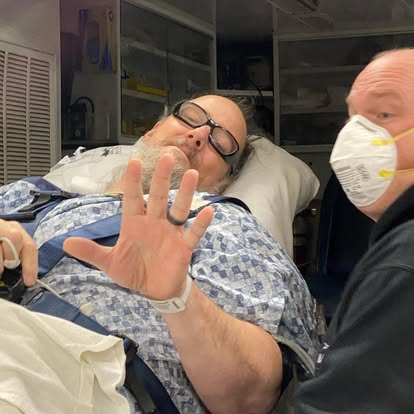
For nineteen days I hadn’t seen the whites of his eyeballs and he hadn’t seen the face of the sun, and in that minute and a half we hugged, we kissed, I told him I’d see him in Rochester, and when his flight nurse texted me as the commercial flight I’d taken landed for a layover in Seattle, I sat there in the middle seat of that jet, sobs of relief shaking through me when I read “We have safely landed in Rochester and he is in route to Mayo Clinic.”
I have had five years to process what happened during that time.
Let’s be clear. My husband is alive. I have had five years with him since that horrific time when I didn’t know moment to moment if he would live. I haven’t cried like that since, and I’m ashamed to say I haven’t prayed like that since either.
It was like every cell of my body cried out to the LORD every single second of every one of those long excruciating days when all I wanted to do was hold his hand and help take care of him in his illness.
My children still carry their own stressful and painful memories from that time, not knowing day to day if their daddy was going to live or die, and not being able to be there next to him. My eldest daughter still talks about that season; she was shopping, cooking, running the household like a little mama junior…working and holding it together like daughters do…
We were a close family before, but we’ve grown so much closer because of that time.
We’ve had five years that other families haven’t had because of how so many were lost during those years.
We don’t have survivors’ guilt though. We have anger.
I have anger.
The surgery took all day and my friend, my medical angel, she texted me and told me not to worry about how long it took. “They’re taking their time. None of them are used to seeing a big Alaska heart like your man’s.”
The cardiothoracic surgeon’s hands were long and clean and soft when he came and held mine after Matt’s surgery, and he told me two of the heart valves had disintegrated upon removal. They had been ravaged with infection.
That night was the worst one of all. I was encouraged to go see him, and still under heavy sedation, he tried to come awake when he heard me. He fought and he worked to pull out his ventilator tube, and it took me and three nurses to hold him down until they could calm him with another shot, and a single tear ran out of his eye and traveled down to his ear. I kissed it and whispered to him that I wanted him to rest and not fight because I was okay and I would be here as soon as he woke up and I went to the hotel and cried myself to sleep because seeing my strong man sad and scared and helpless trying to get to me broke my heart in two.
He was sitting up chatting with the male nurse the next morning, and it was like any normal morning, him there smiling, eating his Jello, and the sweet young man who reminded us so much of our sweet nephew back home casually pulling tubes out of my big man’s neck. He was walking the halls within the hour, and it took six people a half hour to get him ready for the fifty-foot trek up the hallway, and by that evening he was doing laps around the whole floor.
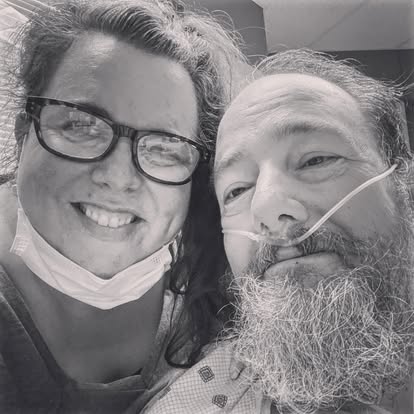
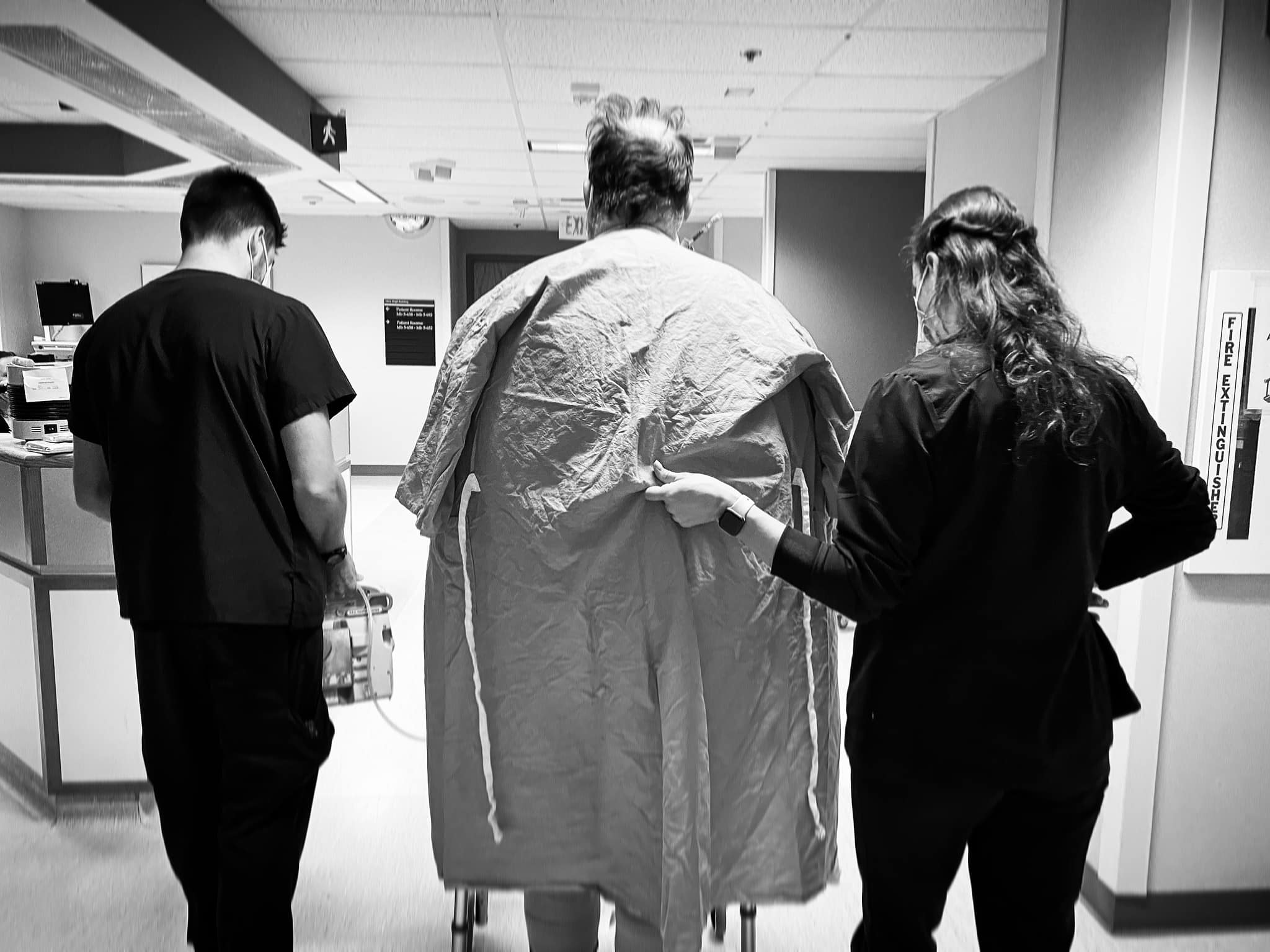
Mayo Clinic saved my husband’s life, and now I hear his carbon valves clicking daily, his clackers, I call them.
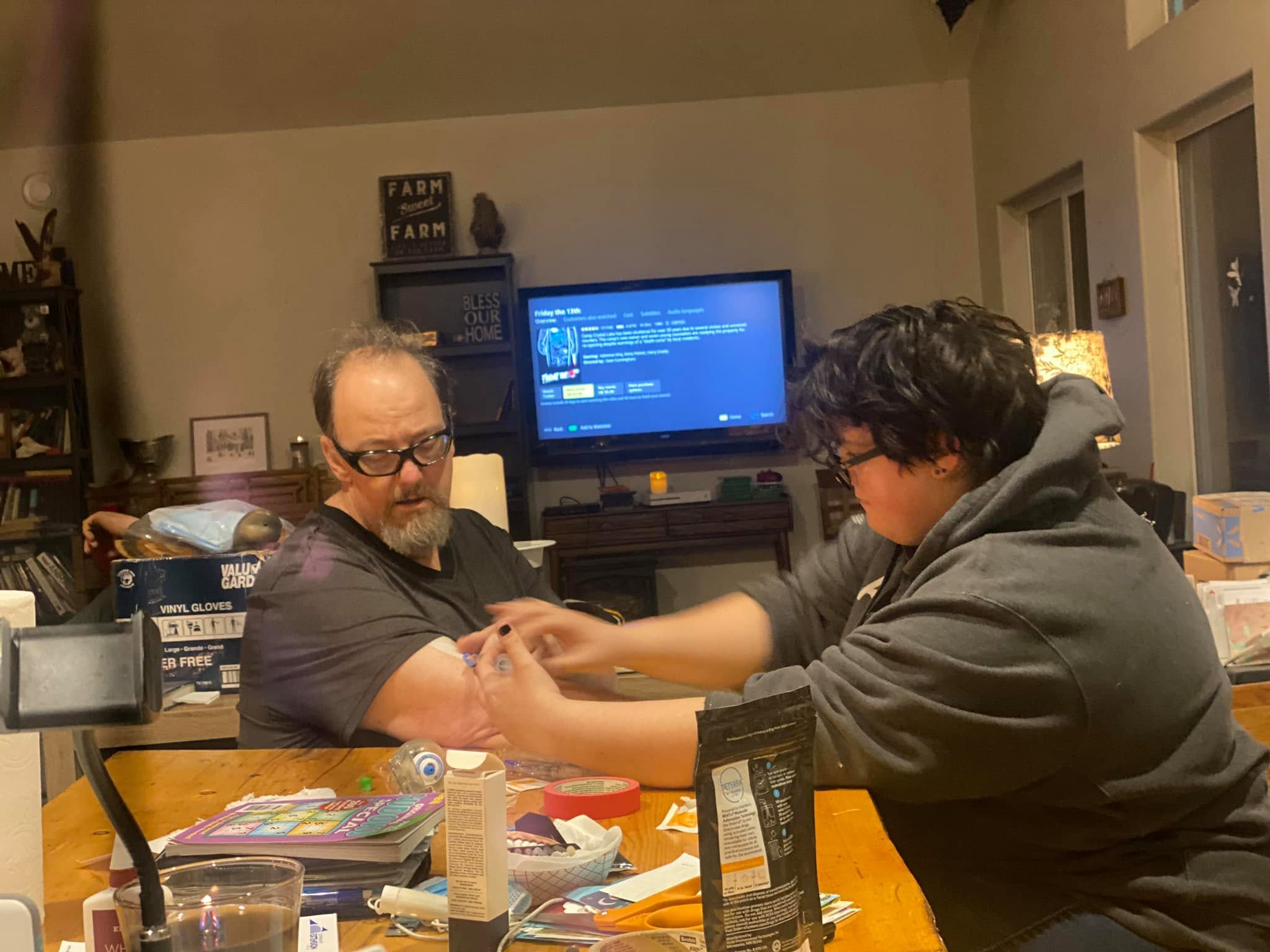
We were home two weeks later, cashing in our air miles to get first class tickets, and I brought a suitcase full of syringes and bags of fluids, and we all learned how to flush his PICC line and give him his twice daily antibiotic infusions. The day the home nurse came and pulled the line that had been running to his heart for three months was monumental, and that night he stood up to be the representative for our table at Thanksgiving dinner at our church, and he read a Scripture verse about being thankful.
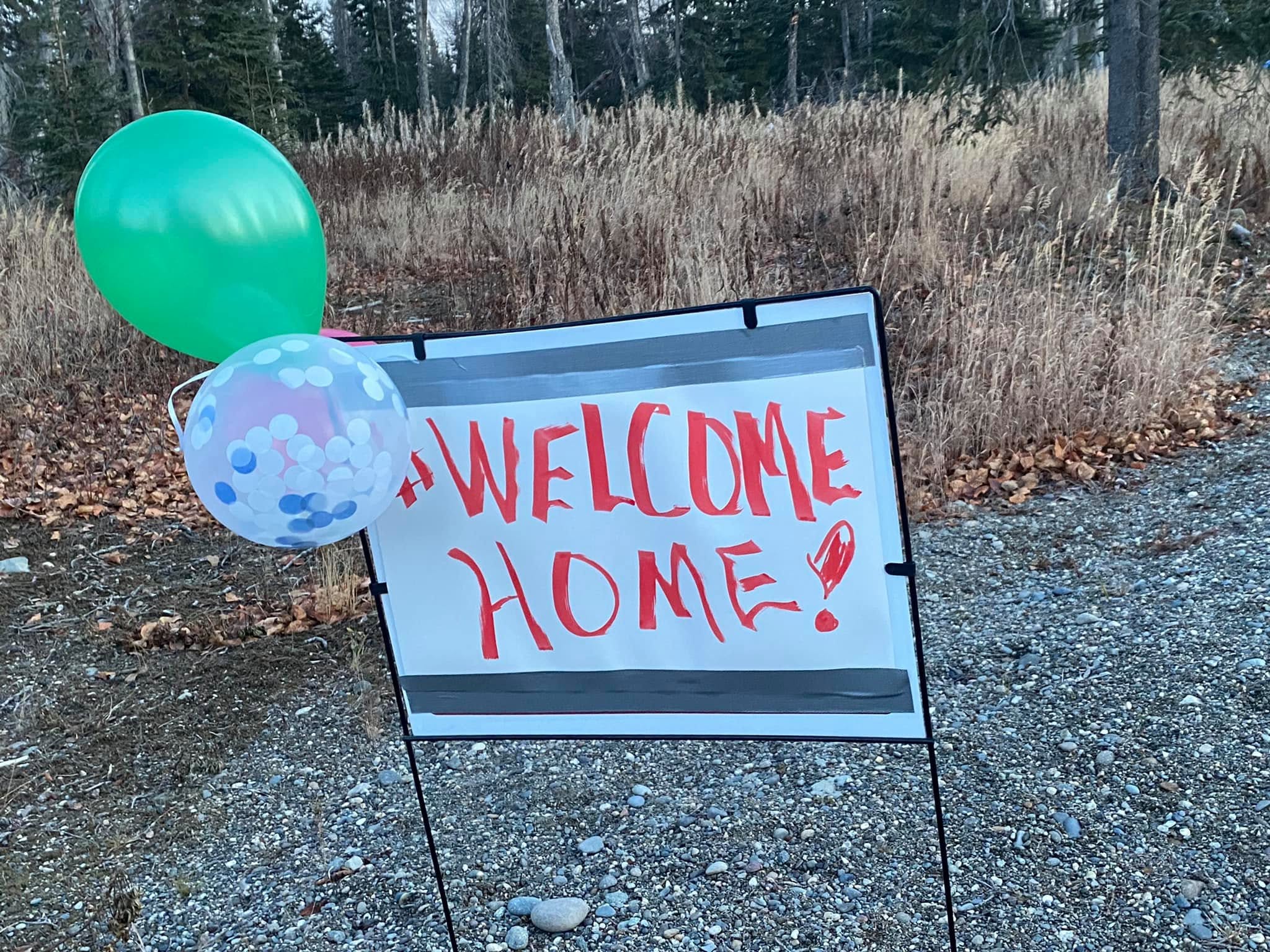
He was back to work in the oilfield six weeks later, and if you listened to him talk, it was just another experience in this thing called life. Something to walk off before getting back to his F-350 ways of doing things.
He is strong.
I remember though, and I won’t ever forget.
Our kids won’t forget.
I listen for his clackers still in the night.
I put my hand over the big scar, and I feel the carbon clicking like a watch, and I remember that life is fleeting and that men messed up a time in our world to the point that my husband almost died.
And that too many did die.
I still hold anger.
My heart will forever be grateful to the men and women at Mayo Clinic who saved my man, and who welcomed me to be part of his daily care and healing. They understood that a patient needs the comfort of their family to be near to them and how that brings strength and power over illness. Matt changed once I was able to be with him. He was in control again. He didn’t feel helpless. He had his person with him and that made him feel himself again.
I am angry for all of those who didn’t have that.
I am angry at the fact that there were children who did not have someone familiar with them as they were sick and scared. I am angry that there were people who died alone.
And I won’t forget.
I have my man, and I’ll be so thankful for each and every remaining day I have with him, but I won’t ever think of that time and not be angry at the pain and loneliness that so many suffered because of the mismanagement at the hands of our government. That time is a black mark on the timeline of this world’s history, and I hope that every single person I know will use it as a reminder to never, ever let it happen again.
Covid almost killed my husband, and he didn’t even have Covid.
It is bittersweet that we lost so many, and that we almost lost him, too.
Thank you, LORD for sparing him and helping us get him where he needed to be, and please, Father, comfort those who were not spared the loss of their loved one, and bless them with an extra measure of your love as they too remember and are angry.

