In the 70s and 80s, a friend was someone who walked home with you from school, someone who came to your slumber parties, a partner with whom you grew up. A friend was someone who knew exactly who you had a crush on, knew what your first name sounded like matched up with the last name of every cute boy in class, knew your favorite colors, and was someone that dressed the same as you during Spirit Week.
Friendship is a state of enduring affection, esteem, intimacy, and trust between two people. In all cultures, friendships are important relationships throughout a person’s life span(Encyclopedia Britannica).
Dictionary.com defines friendship as
1 the state of being a friend; association as friends.
2 a friendly relation or intimacy.
3 friendly feeling or disposition.
If we fast forward to friendship in the 21st century, we are forced to look at a very different definition and are left uncertain as to the actual meaning of the word. The widespread onset of Facebook in 2006 began the process of redefining friendship. Whereas a friend once meant someone actually close in relation or intimacy, “friend” somehow changed from a noun into a verb, and with that change, so changed the definition –and authenticity- of friend. “Facebook has turned the word “friend” into a verb, but just because you’ve friended someone on Facebook does that make them your friend in real life? Not according to a study that found almost all Facebook friends are entirely fake.” (Cuthbertson).
If the definition of friendship was changing in 2006, it was completely turned on its nose by 2020. In 2020, our world was turned upside down with the worldwide shutdown from the onset of the Covid-19 virus, followed by the death of George Floyd and the ensuing riots nationwide, and then hitting the apex of chaos during the controversial and contested election for the president of the United States of America.
Having a social media account in the 21st century, and especially after the year 2020, invariably means that at some point, you will be “unfriended”.
What does it mean to be unfriended?
Is it ethical to unfriend someone on social media and still consider them a friend in life?
What is the purpose of unfriending someone on social media?
These are all questions consumers of social media are faced with more and more in this day and age, and issues one should take some time to consider as they maintain relationships online and in person. Social media has brought people so much closer, yet many times, causes vast chasms as the face-to-face aspect of friendships is more and more replaced by relationship maintenance in the way of likes and an occasional comment on a post or picture.
I have always utilized my social media accounts to maintain living, breathing relationships of both family and friendships. I’ve never been in the habit of friending random folks I meet at the grocery store, or co-workers I do not share an affinity for. People I “friend” are people with whom I share things in common, or who share a connection with me, my past, or my family. I have fully realized that some utilize their social media accounts with a sense of frivolity and casualness, but that has not been the way I have chosen to use my Facebook or Instagram accounts. I don’t hold it against anyone on my friends’ list for utilizing their friends’ list in different ways than I, but it has always been my standard to keep people on my friends list who are close to me or my family, or who have a relationship with me that is somehow meaningful.
Some of my closest friends and I have been able to maintain friendships on Facebook when we would not otherwise be able to get together in person, or even to have time for phone calls. Our family out of state has been able to be part of our children growing up here in Alaska while none of us has been able to travel often to see one another. I have been able to reconnect with old friends from childhood I may have otherwise just never been able to speak with again, all because of social media and the reach and connection it provides to those of us who utilize it.
During the year 2020, when all of America was in turmoil, -the whole world really- it became evident on social media that the circumstances surrounding us all were beginning to cause division among people, even the closest of friends. Political differences, opinions about masking, vaccinations, the election, the riots, BLM…these were topics, and continue to be, that put the fabric of friendships to the test, sometimes even to the point of unraveling.
Imagine the surprise this past year to have lost friends on Facebook.
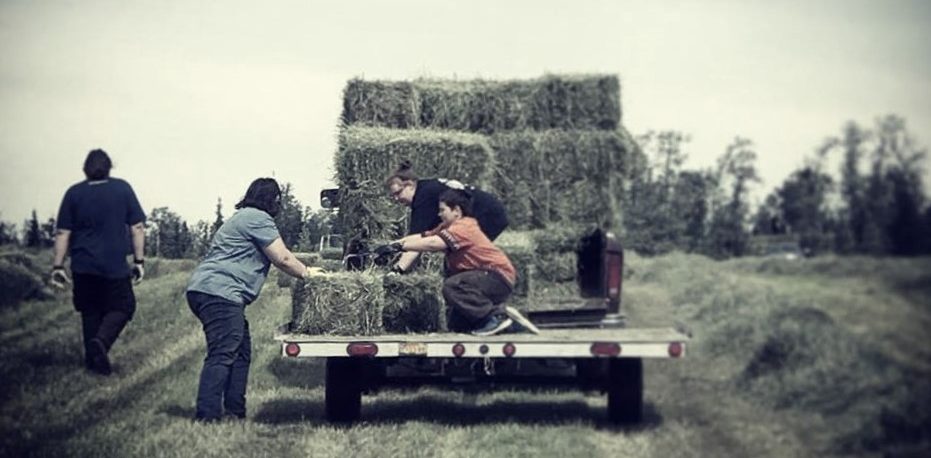
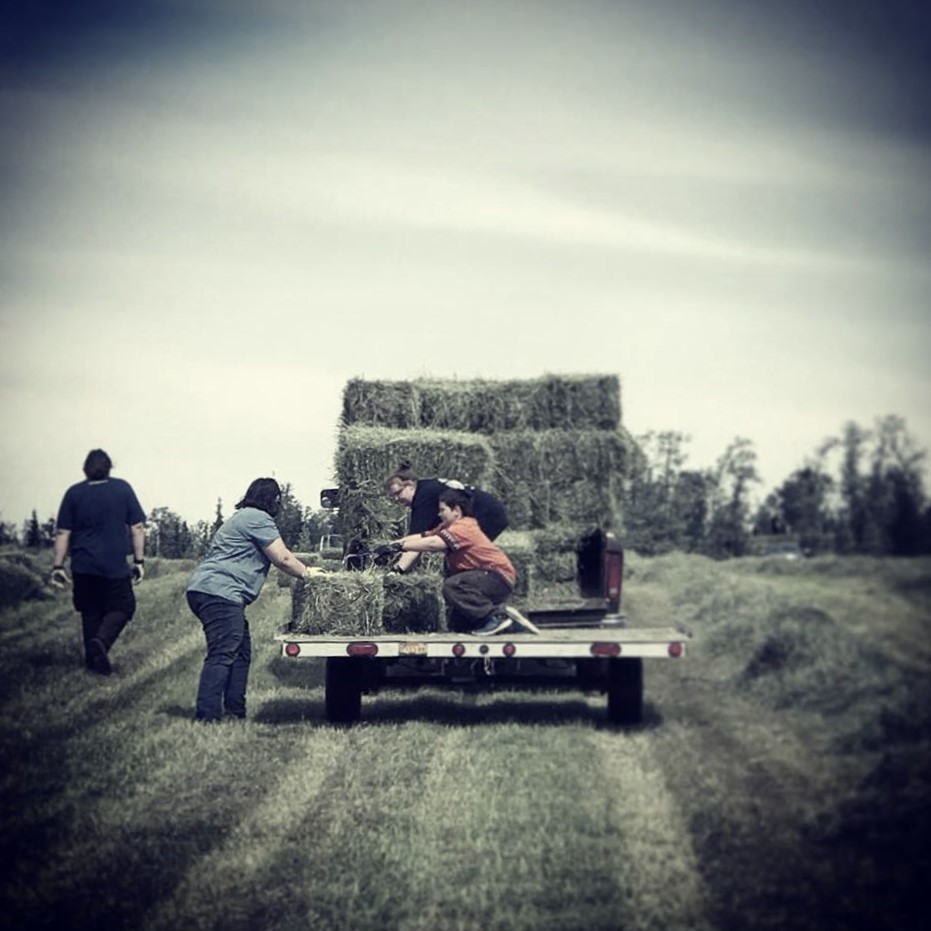
Imagine the knowledge of having photos of our everyday farm life being reported by someone on our friends list for being graphic.
Imagine the division in a relationship to have someone you’ve known and been friends with for thirty years all of a sudden not show up on your list of friends one day.
Imagine the doubt that creeps around the corners to have older people from church who’ve once mentored you just be gone from your life online with no explanation or word.
Imagine the shock to have a friend from elementary school publicly proclaim on your social media page that you and your friends are ignorant and not worthy of your opinions being heard so she has decided to block you.
Imagine the conflict of it all.
The handful of folks who unfriended me were not just merely taking a break from Facebook like so many of us did this past year. They were not just making the size of their circle smaller while the world around us was so uncertain.
No, the folks that unfriended me were in direct opposition to things that I believe, the items and information I shared, and the way I utilize my social media account.
I was unfriended for my political stance.
I was unfriended for my religious beliefs.
I was unfriended because I utilize my social media account much like I would an open house where friends are present, sharing an open air exchange of respectful and civilized conversation, opinions, laughter, quips, and deep thoughts.
I was unfriended for how I think.

According to Encyclopedia Britannica, friendship is generally characterized by five defining features:
1. It is a dyadic relationship… it involves a series of interactions between two individuals known to each other.
2. It is recognized by both members of the relationship…characterized by a bond or tie of reciprocated affection.
3. It is not obligatory; two individuals choose to form a friendship with each other…
4. It is typically egalitarian in nature…each individual in a friendship has about the same amount of power or authority in the relationship.
5. It is almost always characterized by companionship and shared activities…one of the primary goals and motivations of friendship is companionship…friendships often perform other functions…emotional support and providing opportunities for self-disclosure and intimacy.
Being unfriended on social media caused me to take a step back and evaluate the friendships I’ve formed over the course of my life and to really consider what it means to be a friend. What did my friendships look like in the 70s, 80s, and 90s versus today? What did it look like then to be unfriended? How is that different than what it looks like to be unfriended in 2020?
This question forces us to ponder how much the definition of friendship has changed between then and now. And if we take that question one farther, we could even ask if in today’s day and age, do we rearrange our definitions and expectations of friendship to accommodate for today’s culture, or do we rearrange our expectations of today’s culture to accommodate for friendship?
What carries more weight, the culture or friendship?
Some may think that question may be looking too deeply into the current state of affairs as they pertain to friendships. But if one were to take my simple example, that is of an ordinary American who simply shares her opinions and information in an innocuous and non-threatening way on her own social media page, only to have a small number of people who were once her friends make the decision to unfriend her for those opinions, can’t we argue that we are indeed living in a time when our culture, that is, our expectations of how our friends should talk, act, and behave— has become greater than what the friendship is?
Our expectations of friendship have been rearranged to accommodate for today’s culture. I would add that our responsibilities in friendship have also been rearranged and reprioritized. No longer are we a society that values friendship above differences in opinions. No longer are friendships held in the highest esteem, with opinions, beliefs, and political stances being secondary in relationships.
This is, thankfully, not the norm in all relationships, and could be classified as a bit of an over generalization. We all have wonderful friendships we treasure, with people who are our polar opposites. These friendships survive and are sustained because the friendship is elevated above the culture. The relationship between people is what matters, and the differences in beliefs and opinions are secondary. Those are the Spirit Week friendships; the slumber party friendships; the favorite color friendships.

I have come to the conclusion in this season of my life, a life that touches six decades, that it is imperative to put more weight on our friendships than on our culture. I have taken stock of the friends in my life, the differences among us, sometimes the stark opposing views…and I have realized that all of the differences pale in comparison to the love and respect we have for one another and the friendship we share.
Over the course of 2020 and into 2021, I have examined my heart as I looked at the hurt and confusion over being so quietly and easily cut out of the lives of a handful of people I had, until that point, shared a mutual respect and friendship. I have been forced to question years-long mentorships, decades-long relationships, and even life-long friendships. I have been faced with the issue of wondering exactly what friendship means today compared to what friendship once meant. I have accepted the fact that my beliefs and opinions won’t always align with others, and that in today’s climate, that may mean that I lose some that I thought were my friends.
Even just ten short years ago, this discussion would be perceived as petulant, self-indulgent, and attention seeking. To use the age old adage, “back in the day”, a conversation of relationship statuses on social media, or the separation of relationships, would be seen as high drama and would bring about dismissiveness and disdain.
Today though? To unfriend someone has become completely normal, and not just for reasons of family rifts or growing apart. Today, it has become completely common to unfriend someone because of differences of opinion or politics. And The Unfriending can happen in a way that everyone knows about it (cue community pages in which drama has its day), or on the flip side, maybe no one, not even you, knows about it (cue the going to drop a sweet line on your friend’s page only to discover you’re no longer friends).
I understand there are instances in which people find the need to omit someone from their friends list: family struggles that are just too emotionally intense to maintain; abusive relationships; personal crisis that brings about the need to dramatically reduce the circle of people one interacts with…there have been times and instances when almost every one of those circumstances has found me needing to remove someone off of my friend list after much thought and introspection. Just because someone is on our social media platforms, doesn’t mean that they should automatically stay there forever.
But in this climate of casually unfriending with indifference, how does “the unfriended” one respond? What reaction should one have when the unfriending was clearly in regard to politics, taking offense to a difference in opinion? What response should one have when they’ve been on the cancelled end of cancel culture? Should one carry on as normal? When running into the unfriender at the grocery store, should the topic be brought up? Should one make mention of it privately? Or should one just carry on about their business as if nothing happened? How does one reconcile the sting of having a friendship on social media scrapped while living in a world that places no value on those same social media friendships?
I feel like too often today we allow ourselves to be acclimated to the complacency of our culture, when even just fifteen years ago, cutting someone out of our life for having a different set of political beliefs would have been deemed drastic and extreme. It has become acceptable to just cut out what we don’t like, and in a sense, plug our ears to anything that contradicts our beliefs or that offends us, even if in the slightest way.
What happens in a relationship once it has endured an unfriending?
Is it still a friendship?
When friendships hit a snag in the 70s and 80s, the two friends might have a falling out, maybe even yell at one another, and then quit speaking for a spell. Being out of sorts with childhood friends is a normal part of learning how to be friends, and invariably, the two friends would come back together, agree that they still liked one another, and pick back up the friendship where it left off.
What happens to a friendship though when there’s a falling out on social media, or even just a quiet walking away of one friend from the other? That all depends of course on the closeness of the relationship to begin with. Maybe if the relationship is with an acquaintance or a casual business colleague, the unfriending may be inconsequential and a minute event.
But if an actual friend? Does that person remain a friend? Or does unfriending someone communicate to them that you no longer value their opinions, their thoughts, their beliefs?
If you block someone, are you plugging your ears to anything they have to say and are essentially telling them that their words and what they have to say do not matter?
When someone is unfriended, should they assume that you no longer care about them? That you believe they do not matter?
When did friendship come to mean that we all must think the same? When did friendship stop being a celebration of differences and loving others and their warts, bumps, and bruises? When did conversations and healthy debates quit happening? How did our grandparents make lives, make homes, make love with those holding direct opposing political beliefs and still manage to laugh and love and make a life, but today, we are surrounded by those who cannot maintain a relationship or even tolerate an opinion that is in opposition to our world view?

Being on the receiving end of this dismissiveness several times over the past year, I have had some time to think through how I feel about what it means to be unfriended for differing opinions by those I truly thought were friends. I have come to the conclusion that this is the world we live in today, and while I may not like it, and though I may yearn for the simpler, truer, and purer friendships of the past, this is just where we are, and I can only truly control how I react to it and how I treat friendships.
I have decided that I will continue to honor friendship. I have decided that I will continue to place the person that is my friend above the political opinions they may hold. I have decided that should someone’s posts become too frustrating or irritating to me, I will not block them or unfriend them, silencing them or cutting them out of my life, but I will instead do as friends occasionally do and take a short break from one another and to do this, I will use the “snooze” feature, which provides a pause in their posts, allowing me to focus instead on the friendship.
I have decided that in today’s political climate, if two people are on opposing sides in most everything happening in the world today, they probably aren’t going to agree on much, so they either need to agree to elevate people above politics and love one another in spite of the chasm between their opinions, or they need to agree to walk away from the friendship because of it.
And if that’s what happens, I have decided that I will have to be okay with that and not hold a grudge or self-doubt in my heart.
But I have also decided that because of the value I place on friendship and how important it is to me, to our society, and to our world, when I find myself on the receiving end of the unfriending, I will no longer allow myself to be purveyed by those who’ve deemed me and my opinions deserving of being silenced. Self-respect and honoring the value of oneself are foundational to friendships, and even in the modernized parameters of what friendship on social media means, appropriate personal boundaries are so important. I have decided to be kind to myself and not subject myself to anyone who has decided that I am no longer more important than politics. I am perfectly fine being in disagreement over politics or religion, but when unfriended on social media over these things, I will take that to mean you no longer wish to be part of my life, which means there is no reason for you to be on any of my social media platforms.
If friends are truly friends, that means they love one another in spite of their differences, and sometimes even because of them. It means they respect the differences of their friends: color, creed, beliefs, opinions, and politics. It means our differences make this world beautiful and our perspectives help us understand one another. Unfriending someone tells them that none of that matters to you anymore, and that neither do they.
When we take a look back over our shoulder to how friendships once were, we begin to see how much they’ve changed. But we don’t have to allow ourselves to continue with the complacency of our culture. We can remember what it felt like to dress the same as our bestie for Spirit Week. We can contemplate some of the funny and childish ways we argued and then came back together after a spat on the playground. We can ponder how speaking privately and transparently to a friend changes the course of a relationship that lasts a lifetime. We can marvel at the written word and how our grandparents maintained a marriage and a family by choosing the words they used carefully, and how each word was treasured, even the ones that may have caused friction. We can resolve to consider our friendships, our friends, and their value as a person before we opt to cut them from our lives and our newsfeed because we disagree with their politics. We can work to elevate people above politics.

If we are able to do these things, we may just find ourselves in friendships that are richer and deeper and wider. We may find ourselves listening to people more instead of being so quick to be offended. We may find ourselves coming together instead of growing apart, and we may find fewer people on the receiving end of the unfriending.
***
The Unfriending – Cassandra Rankin
ENGL 270
April 2021
Works Cited:
“Friendship.” Dictionary.com, Dictionary.com, http://www.dictionary.com/browse/friendship.
Hohmann, Lisa , Furman, Wyndol and Berger, Lauren. “Friendship”. Encyclopedia Britannica, 26 Jan. 2017, https://www.britannica.com/topic/friendship. Accessed 6 April 2021.
Cuthbertson, Anthony. “Facebook Friends Are Fake Friends, According to a Study.” Newsweek, Newsweek, 17 May 2016, http://www.newsweek.com/facebook-friends-are-fake-friends-study-finds-419189.
 Cassandra Rankin
Cassandra, though I have never met you from the day I ready your book of Annie I have felt a kindred spirit with you. This is neither influenced by political, spiritual, racial or age. It is simply based on my heart feels a connection to you Period! Obviously I receive your blog and have certainly enjoyed your writings and thought provoking themes. I was brought into your home and life that way. I am at ease with simply that. Truly a friend is a friend regardless of circumstances. Or they aren’t your friend in the first place. I am so thankful for the love of the Father who has set the ultimate example for us that no matter what He loves us and laid down His life for.us. That will never change. Certainly we see that the world as we have known it has changed but WE went obligated to be changed by it. My choice is to remain who I am and be true to who I am. That focus also directs my actions and opinions of my relationships. Family and friends.Will always be important.to me regardless of opinions expressed or differences. That is who I am and was made to be. I will remain true to who my heart is.
LikeLiked by 1 person
It is a neat thing in this life how we cross paths with people, some of those who stay awhile! I’m always thankful for your thoughts and your input…always good and encouraging to connect with fellow believers! ❤️
LikeLike